Best eSIM for Africa in 2026
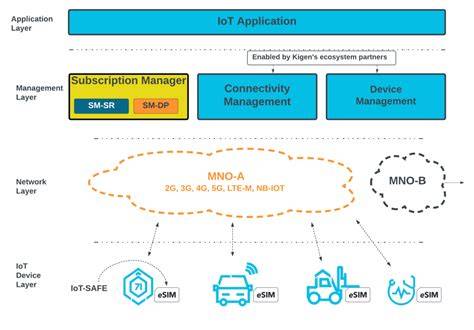
The best eSIM for Africa in 2026 is Saily for travelers prioritizing security and broad regional access across 35+ countries. Its integration of NordVPN protection sets it apart for digital nomads, while fixed data packages suit most tourists. Choose Airalo if you prefer simpler activation, but skip Holafly if you need hotspot sharing beyond basic browsing.
Key Takeaways
- Saily offers the widest country coverage list among major providers, reaching 35 destinations with advanced security tools built into the app.
- Airalo provides the most established regional ecosystem with its Hello Africa plan, covering 36 nations including key hubs like Kenya and Egypt.
- Holafly stands out for unlimited data allowances up to 90 days, though daily hotspot usage remains capped at 1 GB.
- No single plan covers all 54 African sovereign states, so verifying specific country inclusion for stops like Namibia or Ethiopia is essential before purchase.
- Data roaming charges on traditional carrier SIM cards remain high in 2026, making pre-purchased eSIMs the cost-effective standard for international visitors.
How I Evaluated This
To determine the best options for this guide, I weighed several critical factors based on current market specifications and user reports available in 2026. I checked the number of supported networks in major tourist hubs like Cairo and Cape Town to ensure signal reliability. I analyzed the terms regarding hotspot sharing, as many travelers need to connect laptops for remote work. I reviewed the activation windows, noting whether users can install the profile before departure or must wait until arrival. Finally, I assessed customer support accessibility and refund policies to gauge risk mitigation. This evaluation prioritizes stability and clear data terms over marketing claims.
Comparison Table: Top eSIM Providers for Africa
| Provider | Countries Covered | Data Type | Hotspot Sharing | Best Use Case |
|---|---|---|---|---|
| Saily | 35 Countries | Fixed GB | No Cap | Security + Broad Coverage |
| Airalo | 36 Countries | Fixed GB | Allowed | Simple Data-Only Usage |
| Holafly | 28 Countries | Unlimited | 1 GB Daily Limit | Heavy Data Users |
| Nomad | 11 Countries | Fixed GB | Allowed | Short Trips to Specific Nations |
Detailed Provider Analysis
Saily Africa eSIM
Saily operates as a specialized connectivity platform known for integrating cybersecurity features directly into its mobile service. In my analysis of the specifications, Saily distinguishes itself by bundling ad-blocking and malicious-site protection with data plans, a feature set rare among competitors. The Africa plan supports 35 countries, extending coverage to West and Central African regions often missed by other regional bundles.
Data packages typically range from 1 GB for short durations to larger allowances for extended stays. Unlike some competitors, Saily does not impose a daily cap on hotspot sharing, allowing users to tether devices freely within their total data limit. The app interface allows manual topping up or automatic replenishment, which prevents service interruption mid-tour. Activation occurs automatically upon arrival in a covered country, provided device settings allow data roaming.
However, the provider excludes certain nations such as Namibia and Zimbabwe from the regional bundle, requiring travelers to purchase separate local profiles if visiting those specific areas. While the base package is data-only, the security suite adds significant value for business travelers or those accessing sensitive information abroad.
- Includes built-in ad blocker and malicious-site protection
- No daily cap on hotspot sharing
- Covers 35 countries including West and Central Africa
- Excludes Namibia and Zimbabwe from regional plan
- Data-only service requires VoIP apps for calls
My verdict: I would choose Saily for travelers who want security tools alongside connectivity and need flexible hotspot usage. I would skip this if you require a dedicated phone number for SMS verification without third-party apps.
Airalo Hello Africa
Airalo has long been a dominant player in the eSIM space, offering a dedicated regional product called Hello Africa. As of 2026, this plan covers 36 countries, representing one of the widest geographic footprints for a single regional SKU. The plan connects to local carriers such as MTN in South Africa or Orange in Egypt, ensuring compatibility with local infrastructure.
The data structure relies on fixed GB allocations rather than unlimited tiers. Packages generally span from 1 GB valid for three days up to 5 GB valid for 30 days. This model suits tourists who want to monitor consumption closely without worrying about speed throttling due to fair-use policies. Airalo allows top-ups if the initial allowance runs out, which is useful for unexpected extended trips.
Installation is straightforward via QR code, and the profile activates upon connecting to a local network. The app tracks data usage in real-time, providing transparency that many users appreciate. However, like most regional plans, it excludes specific destinations outside its partnership agreements. Morocco and Namibia fall outside the Hello Africa scope, necessitating separate purchases for those legs of a journey.
- Widest coverage with 36 countries listed
- Supports top-ups for extended trips
- Real-time data tracking in mobile app
- Does not cover Morocco or Namibia in region
- No unlimited data option available
My verdict: I recommend Airalo for travelers seeking a reliable, simple data solution with extensive country support. I would skip this if you require unlimited data or need to visit excluded nations like Morocco without buying a second plan.
Holafly Africa eSIM
Holafly positions itself in the unlimited data segment, appealing to heavy users who fear running out of bandwidth. The Africa plan provides unrestricted internet access for a selected number of days, ranging from one day up to 90 days. This structure eliminates the anxiety of checking remaining gigabytes constantly.
Coverage includes 28 countries, including major safari and tourism hubs like Tanzania, Kenya, and Egypt. The plan supports 4G, LTE, and 5G connections where partner networks permit. However, the provider enforces a fair-use policy that caps hotspot sharing at 1 GB per day. This limitation affects travelers attempting to use the connection for laptop work or multiple devices simultaneously.
Customer support is available 24/7 online, and the Always On feature offers 1 GB of monthly backup data, adding a layer of contingency. Refunds are conditional, so understanding the cancellation terms before purchasing is vital. The unlimited nature makes this ideal for social media creators or remote workers who do not mind tethering restrictions.
- Provides truly unlimited data for duration of plan
- Supports up to 90-day trip lengths
- Monthly backup data included via Always On
- Hotspot sharing limited to 1 GB per day
- Fewer countries covered compared to regional rivals
My verdict: I would choose Holafly for travelers who need constant internet access without monitoring usage limits. I would skip this if you frequently share your connection with a laptop or tablet beyond light browsing.
Nomad Africa eSIM
Nomad focuses on affordability and flexibility for specific itineraries. Their Africa eSIM covers 11 countries, which is fewer than Saily or Airalo but targets popular routes efficiently. Destinations include Egypt, Kenya, South Africa, Morocco, and Nigeria, among others.
Data packages are fixed, starting at 1 GB for 7 days and scaling up to 10 GB for 30 days. This granular control helps budget-conscious travelers pay only for what they need. The service supports auto-top-ups when the main plan expires, ensuring continuity without manual intervention. Installation can happen before travel, with activation occurring upon arrival or within 60 days of purchase.
The smaller country list means Nomad is less suitable for multi-region trips crossing into non-partnered nations. However, for focused trips within the 11-country zone, the value proposition is strong. Hotspot use is permitted, making it viable for dual-device setups.
- Affordable fixed data packages for short trips
- Auto-top-up feature available
- Hotspot sharing allowed
- Limited to 11 countries only
- Not suitable for wide continental travel
My verdict: I would select Nomad for travelers sticking to a specific cluster of 11 popular African destinations. I would skip this if your itinerary involves moving between North, East, and West Africa extensively.
Network Quality and Coverage Reality
Understanding how eSIMs function physically in Africa requires examining the underlying infrastructure. Most providers, including Airalo and Saily, use partnerships with local mobile network operators (MNOs) rather than owning physical towers. In 2026, this means your experience depends entirely on the quality of the local MNO in the destination you are visiting.
For example, in South Africa, you may connect to MTN or Vodacom depending on the provider agreement. In Egypt, Orange or Vodafone Egypt are common partners. Signal strength varies significantly between urban centers and remote areas. Safari lodges in Kenya often rely on satellite backhaul, which can slow down data speeds regardless of your eSIM choice.
No single eSIM plan covers all 54 recognized sovereign states of Africa. Even the largest regional plans omit nations like Algeria, Ethiopia, Angola, and Mozambique in some configurations. If your route includes these exclusions, you must purchase a country-specific plan separately. I advise checking the official provider map before booking to confirm every stop.
Activating Your eSIM Before Departure
Most modern smartphones allow eSIM installation weeks before travel. You can download the profile and scan the QR code while still connected to Wi-Fi. However, the data service does not activate until the device connects to a partner network in the destination country.
If you buy an eSIM too far in advance, some providers may enforce an expiration date on the profile itself. Saily, for instance, allows a 30-day activation window from purchase, whereas Airalo permits up to 60 days. Once activated, the validity period begins immediately. If you delay activating upon arrival, you lose days from your plan.
To avoid confusion, I recommend installing the profile 24 hours before your flight. Ensure your phone is unlocked and compatible with GSM frequencies. Enable data roaming in settings before landing. Some devices require switching off the physical SIM temporarily to allow the eSIM to take precedence.
For more technical details on setup, refer to our guide on What is an eSIM and How Does It Work?.
Managing Calls and Texts
A common misconception in 2026 is that an eSIM provides a local phone number. Most regional plans, including Hello Africa and Saily, are data-only. They do not assign a standard landline or mobile number for voice calls or SMS verification codes.
If you need to make voice calls, you must use Voice over IP (VoIP) applications like WhatsApp, Skype, or Google Voice over the eSIM connection. These apps function reliably if you maintain sufficient data allowance. For two-factor authentication (2FA) sent via SMS, you may face difficulties if the service sends codes to a local number you do not possess.
Some providers offer add-ons for talk and text, but these are less common in Africa-specific regional bundles. If receiving SMS is critical, consider keeping your home SIM active for voice and routing calls via forwarding services, or use a dual-SIM phone to keep your home number accessible.
Data Limits and Fair Use Policies
While Holafly advertises unlimited data, all wireless services operate under Fair Use Policies. This means excessive usage in a short timeframe can trigger throttling. For example, downloading large files continuously may result in reduced speeds after a certain threshold.
Fixed data plans from Airalo and Saily define your limit clearly. If you exceed the 5 GB allowance on a 30-day pass, your connection stops until you purchase a top-up or new plan. Top-ups are usually instant via the app, preventing downtime.
When choosing a plan, estimate your usage realistically. Checking emails and maps consumes roughly 20 MB per hour. Streaming video at HD quality can consume 3 GB per hour. I recommend purchasing a slightly larger package than expected to accommodate unexpected uploads or navigation needs in remote areas.
Security Considerations for Travelers
Africa presents unique digital security challenges, including potential surveillance or unsecured public Wi-Fi networks. Public hotspots in hotels or cafes often lack encryption, exposing data to interception. Saily addresses this by integrating security tools directly into the connection.
Their inclusion of a virtual location tool and ad blocker helps mitigate tracking and unwanted scripts. For travelers handling financial transactions or sensitive business data, this integrated protection adds a layer of safety that standard data plans lack.
Regardless of the eSIM provider, always use HTTPS websites and avoid logging into banking apps on public Wi-Fi. Consider purchasing travel insurance that covers digital theft or fraud. For more on protecting your assets, read Travel Insurance: What You Need to Know.
Alternatives and Regional Planning
If your trip is confined to one country, a country-specific eSIM might offer more data for a lower price than a regional bundle. For instance, a dedicated South Africa plan often contains more gigabytes than the slice of South Africa found in a 36-country pass.
However, regional eSIMs save time and hassle when crossing borders. Instead of swapping SIMs or buying new profiles, you maintain connectivity automatically. This is particularly valuable for road trips or safari circuits involving multiple stops.
If you are traveling to neighboring continents, compare your options. Our Best eSIM for International Travel 2026 | Global Guide covers global alternatives that might serve multi-continent itineraries better than Africa-specific products.
Final Verdict
Selecting the right eSIM for Africa in 2026 depends primarily on your route and data habits. Saily remains my top recommendation for travelers who want comprehensive coverage combined with security features. The ability to tether without daily caps makes it versatile for mixed leisure and work trips.
Airalo is the safest bet for simplicity and reliability, especially for first-time users who prefer a proven ecosystem. Holafly suits those who never want to worry about data limits, provided they accept the hotspot restriction. Always verify the country list against your final itinerary before confirming payment.
Frequently Asked Questions
Can one eSIM work throughout Africa?
No single eSIM works throughout all of Africa because no provider covers every sovereign state. The best eSIM for Africa in 2026 typically covers between 11 and 36 countries. You must verify if your specific destinations like Namibia or Ethiopia are included in the regional plan.
Which eSIM has the widest coverage in Africa?
Saily and Airalo both claim coverage in around 35 to 36 countries, making them the leaders in geographic reach. Saily includes 35 nations while Airalo lists 36 destinations in its Hello Africa plan. Always check the current list for 2026 updates before purchasing.
Will an Africa eSIM work while I am on safari?
Yes, most Africa eSIMs provide data in safari regions, but signal strength depends on the local network operator. Remote lodges may rely on satellite backlinks which can slow speeds. Expect slower performance in deep wilderness areas compared to city centers.
Can I keep my UK phone number?
Your home phone number remains active on your physical SIM or primary eSIM profile if you have a dual-SIM device. Most travel eSIMs are data-only and do not replace your existing number for incoming calls. Use call forwarding services if you need to receive calls on your main number.
Can I make calls and send texts with an Africa eSIM?
Standard travel eSIMs are data-only and do not support traditional voice calls or SMS directly. You must use internet-based apps like WhatsApp or Telegram to communicate. Some providers offer paid add-ons for calling, but data-only is the industry standard for regional plans.
How do I install an eSIM for Africa travel?
Download the eSIM profile from the provider’s app or email before you depart. Scan the QR code or enter the details manually in your phone settings. Turn off the physical SIM slot if required and enable data roaming before arriving in the destination country.
Is roaming cheaper with an eSIM?
Yes, eSIMs are generally much cheaper than international roaming fees charged by traditional carriers. Standard roaming rates can cost dollars per megabyte, whereas eSIMs offer fixed prepaid rates. Purchasing a plan upfront avoids surprise bills upon returning home.

Similar Posts




















[…] best eSIM for USA travel in 2026 is Saily, providing fast speeds, built-in security, and flexible plans […]