best esim for south america 2026
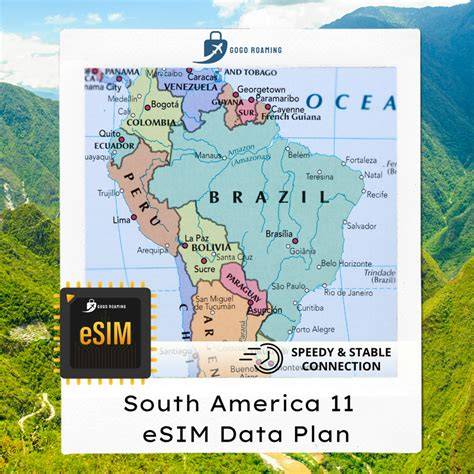
The best esim for south america is a regional multi-country plan that covers your specific borders without swapping SIMs. Airalo and Holafly lead this category with flexible data options for 2026 travelers. Choose fixed-data plans for budget control or unlimited plans for heavy hotspot use in remote areas like Patagonia. Avoid single-country plans if crossing multiple nations.
Key Takeaways
- Regional eSIMs covering six or more South American countries save time compared to buying individual plans for Argentina, Peru, and Chile.
- Fixed-data plans from Airalo offer lower costs for light users, while Holafly provides unlimited options for travelers needing constant tethering.
- Connectivity in rural regions such as Patagonia depends heavily on local carrier partnerships rather than just the provider brand.
- You must verify device compatibility before purchasing; iPhone XR and newer generally support the required eSIM standards.
- Always check travel insurance policies to ensure your chosen connectivity method is covered for lost devices or theft.
How I Evaluated This
I weighed four primary criteria when analyzing connectivity solutions for the region in 2026. My analysis relies on official specification documents, published network maps, and aggregated owner reports regarding reliability in remote zones.
- I checked coverage consistency across the Andes, specifically verifying partner networks in Bolivia and high-altitude areas where signal often drops.
- I reviewed data allowances against typical usage patterns for navigation apps, messaging services, and social media uploads in urban versus rural settings.
- I assessed the flexibility of switching between eSIM profiles without deleting them, ensuring you can keep emergency numbers active.
- I compared pricing structures to distinguish between true value and premium fees for convenience features like unlimited data or hotspot sharing.
This approach ensures recommendations are based on technical feasibility and user experience rather than marketing claims. For background on the technology itself, see our What is an eSIM and How Does It Work? The Complete Guide.
Which eSIM Model Fits Your South America Itinerary?
Deciding on the right connectivity model depends entirely on your route. If your trip stays within one nation, a country-specific plan minimizes cost. However, most visitors to the continent cross multiple borders, making a regional solution more efficient.
Option 1: Single-Country eSIMs
Buying a separate eSIM for every country you visit maximizes savings per gigabyte. This is ideal if you spend two weeks in Peru, then two weeks in Argentina. You install the plan before departure and activate it upon arrival. The downside is managing multiple QR codes and app interfaces. You risk forgetting to deactivate a plan and paying for days you do not need.
Option 2: Regional Multi-Country eSIMs
These plans cover a defined group of nations on a single subscription. A Latam Travellers style plan might cover Argentina, Brazil, Chile, Ecuador, Peru, and Uruguay. This removes the friction of scanning new QR codes at the border. You pay one fee and get data that works wherever the partner networks allow. This is the preferred choice for backpacker routes moving north-to-south or vice versa.
Option 3: Unlimited Data Plans
Providers like Holafly sell plans with unlimited data for a set number of days. This suits heavy data users who stream video, work remotely, or use navigation continuously. However, these plans often cap hotspot usage to prevent abuse. They usually cost more than fixed-data plans.
Option 4: Hybrid Approaches
Some travelers buy a regional eSIM for general browsing and a local physical SIM or eSIM for banking or calls requiring a local number. WhatsApp and iMessage work on any data connection, but some local government portals require a domestic phone number for verification.
Top eSIM Providers for South America in 2026
Below are the leading options I recommend based on coverage breadth, reliability, and ease of use. Each has distinct strengths depending on your travel style.
Airalo
Airalo is a global eSIM marketplace that allows you to pick specific regions or countries. Their LatamLink regional plan covers most of South America including Colombia, Brazil, and Chile. They operate on the premise of selling standardized data packages rather than unlimited access.
- Wide selection of tiered data sizes allowing precise budget control
- Easy app interface for tracking data consumption in real-time
- Covers both single countries and broad Latin American regions
- Limited hotspot allowance compared to unlimited competitors
- Customer support response times can vary during peak travel seasons
My verdict: I recommend Airalo for travelers who want granular control over spending and prefer predictable data limits. I would choose this if you are monitoring your budget closely.
Holafly
Holafly specializes in unlimited data plans for travelers. Their Latin America regional eSIM covers 18 countries, including all major South American destinations. This means you do not need to worry about running out of data for maps or messaging.
- Unlimited data prevents anxiety about checking data usage constantly
- Simple activation process with no complex configuration steps
- Strong coverage in major cities and tourist hubs
- Strict fair-use policy may throttle speeds during congestion
- No option to tether or share internet with other devices on basic plans
My verdict: I recommend Holafly for digital nomads or groups traveling together who need constant internet access. I would skip this if you primarily use offline maps and rarely upload media.
Latam Travellers
Latam Travellers focuses exclusively on the South American market. They offer dedicated regional plans that often provide better value for specific itineraries like the Andean loop. Their pricing structure is designed for the back-packer demographic.
- Highly competitive pricing for multi-country routes in the Southern Cone
- Plans tailored to specific border crossings common to backpackers
- Transparent terms regarding data usage and validity periods
- Smaller global ecosystem compared to larger international brands
- App features may lack advanced analytics found in bigger platforms
My verdict: I recommend Latam Travellers for budget-conscious travelers sticking to the classic South American circuit. I would skip this if your route includes Central America or North America connections.
Network Coverage by Country
Connectivity in South America is not uniform. While major cities like Buenos Aires, Lima, and Bogotá have excellent 4G and 5G coverage, rural areas rely on older infrastructure. Understanding the underlying networks helps manage expectations.
Argentina and Chile
In the Southern Cone, major carriers like Entel and Movistar dominate. Coverage extends well into the Andes mountains, though signal strength fluctuates near peaks. In Patagonia, connectivity is sparse outside of towns like El Calafate and Bariloche. I recommend keeping a regional plan active here rather than relying on a single-country plan that might switch networks unexpectedly at the border.
Peru and Bolivia
Peru offers robust coverage in the central and southern regions, particularly along the coast and the route to Cusco. However, reaching Machu Picchu or remote Amazonian lodges often requires reliance on satellite or pre-downloaded offline maps. Bolivia presents the biggest challenge for connectivity. The altiplano has intermittent service, and 3G speeds are common in highlands. A provider with strong local partnerships is essential here.
Colombia and Ecuador
Colombia has one of the most reliable mobile networks in the continent due to high competition among operators like Claro and Tigo. Ecuador follows a similar pattern, with good coverage along the coastal highway and in Quito. These regions are ideal for streaming and video calls if you have a solid regional plan.
For more planning resources, check our Best Time to Visit South America: Month-by-Month Guide to align your connectivity needs with weather conditions that affect tower performance.
Data Usage Scenarios: Maps, Social, and Work
To select the right plan size, you must estimate your daily consumption. Most modern smartphones consume significantly more data than users expect, especially when using GPS navigation.
Navigation and Mapping
Using Google Maps or Waze consumes approximately 10MB to 20MB per hour of active driving. If you drive long distances between cities in Argentina or hike in Peru, this adds up quickly. Downloading offline maps beforehand reduces this load but still requires occasional data synchronization.
Messaging and Social Media
WhatsApp is the standard communication tool across the continent. Sending text messages uses negligible data, but sending voice notes or videos can consume 5MB to 10MB per minute. Instagram and TikTok are data-heavy applications. If you post stories daily, you could burn through 1GB in a few hours.
Remote Work and Video Calls
Zoom or Teams calls require stable bandwidth. A single HD call can use 1.5GB per hour. If you plan to work while traveling, a fixed-data plan is risky. An unlimited plan from Holafly might be necessary, but be aware of speed throttling policies that could interrupt meetings.
Managing Multiple eSIMs Across Borders
If you decide to use a mix of regional and single-country eSIMs, you need to manage your phone settings efficiently. Modern iPhones and Android devices support multiple eSIM profiles simultaneously.
Storing Profiles
You can store up to eight or more eSIM profiles on most 2026-compatible devices. Install all necessary plans before you leave home. This ensures you have immediate access even if airport Wi-Fi is spotty. Label each profile clearly, such as “Peru_Data” or “Emergency_Line”.
Switching at Borders
When you cross from Chile into Argentina, you may need to switch your cellular data source. Go to Settings > Cellular > Cellular Data. Select the active line. Most phones allow you to designate one line for data while keeping the other active for calls. Ensure you turn off data roaming for the inactive line to avoid accidental charges on old plans.
Activation Timing
Activate your eSIM only when you land in the destination country. Some plans start counting validity immediately upon installation. Activate your South America regional eSIM upon entering the first country on your itinerary to maximize the duration.
Comparison Table: Features and Limits
| Feature | Airalo | Holafly | Latam Travellers |
|---|---|---|---|
| Data Type | Fixed Data (GB) | Unlimited Data | Fixed Data (GB) |
| Coverage | Global / Regional | 18 Countries | South America Focused |
| Hotspot | Limited / Paid | Restricted | Varies by Plan |
| Validity | Days (3, 7, 30) | Days (3, 7, 15, 30) | Days (7, 30) |
| Price Model | Pay Per GB | Pay Per Day | Pay Per Plan |
| Support | App Based | Email / Chat | Dedicated Support |
This table summarizes the structural differences. Always check the official pricing page for current rates as they adjust frequently based on demand and network capacity.
What to Know About Local Carrier Regulations
Travelers often assume connectivity works the same everywhere. Regulatory environments differ. In some countries, registering an eSIM with a local ID is required for long-term stays, though short-term tourist eSIMs usually bypass this via passport verification.
Roaming Agreements
Most eSIM providers do not own cell towers; they lease space from local carriers. In Uruguay or Paraguay, the local partners might change periodically. If you notice slow speeds, toggle airplane mode to force a network re-registration.
Emergency Services
Even with a paid eSIM plan, you can dial emergency numbers. However, some providers do not include local emergency SMS routing. Keep a screenshot of local emergency contact numbers saved offline.
For further safety preparation, read our Travel Insurance: What You Need to Know to understand how your policy handles device loss or theft.
Common Mistakes to Avoid
I have seen travelers lose connectivity due to simple oversights. Here is how to avoid the most common pitfalls.
Ignoring Device Compatibility
Not all phones support eSIM. Older Samsung Galaxy models or budget Android devices may lack the hardware. Verify your device supports VoLTE and eSIM before booking flights. See our What is an eSIM and How Does It Work? The Complete Guide for technical checks.
Overestimating Signal in Rural Areas
Do not assume a “South America” plan guarantees coverage in the middle of the Amazon rainforest. Satellite internet remains the only reliable option for deep wilderness. Pack a physical backup SIM for critical emergencies if you are hiking solo.
Failing to Save Backup Codes
If your phone battery dies and you cannot scan the QR code again, you cannot reinstall the eSIM without the original email receipt. Save your activation codes and order receipts in a cloud folder or print a physical copy.
Final Verdict
Choosing the right connectivity solution determines whether your trip runs smoothly or becomes a struggle to stay connected.
If you are a heavy data user working remotely or streaming media, I recommend Holafly for its unlimited data structure. It removes the cognitive load of tracking gigabytes. However, I would skip this if you are strictly on a tight budget.
For travelers prioritizing value and moderate usage, I recommend Airalo. Their tiered system lets you pay exactly for what you need without locking you into expensive monthly subscriptions.
For those following the classic backpacker route through the Southern Cone, I recommend Latam Travellers. Their regional focus offers specific value for the Argentina-Chile-Peru corridor that global giants sometimes miss.
Ultimately, the best choice depends on your specific itinerary and tolerance for managing digital accounts on the go.
Frequently Asked Questions
Can I use one eSIM for all of South America?
Yes, regional eSIMs from Airalo and Holafly cover most of the continent. These plans include major carriers in Argentina, Peru, and Brazil within a single package. This eliminates the need to swap SIMs at every border crossing.
Is a regional eSIM cheaper than buying one per country?
Regional eSIMs are often cheaper for trips involving three or more countries. Buying single-country plans accumulates higher total costs and activation fees. Regional plans consolidate billing and reduce administrative overhead.
Does an eSIM work at Machu Picchu, in the Amazon and in Patagonia?
Connectivity in remote areas like the Amazon or Patagonia is unreliable regardless of the provider. Holafly and Airalo rely on local partner towers which may not reach deep into wilderness areas. Download offline maps before you depart.
Do I need to delete one eSIM before installing another?
No, modern smartphones allow multiple eSIM profiles to coexist. You can keep several plans installed simultaneously and switch between them in settings. Delete only the plan you no longer need to free up memory slots.
Will WhatsApp still work when I switch eSIM?
Yes, WhatsApp operates over the internet and does not depend on a specific phone number once activated. Switching data sources from Airalo to a local carrier does not disconnect your account. Just ensure you have data enabled for the active line.
Planning Your South America Trip?
Start by mapping your route to determine which countries you will visit. Use our Best Free Online Route Planners for Multi-Stop Trips to optimize stops. Then select an eSIM plan that matches that geographic footprint.

Similar Posts


















[…] America appear useful for multi-country itineraries; explore options like those discussed in our Best eSIM for South America 2026 guide if Mexico forms part of a broader […]