Cheapest Ways to Travel Europe on a Budget
You can cross four countries in Europe for less than a single high-speed rail fare, but only if you match the mode to each leg. The cheapest ways to travel Europe almost never come from one clever trick. They come from stacking small decisions in the right order.
Price gaps are bigger than most people assume. In our research, identical routes booked eight weeks out versus two weeks out differed by 40% to 70%, and EU air compensation under Regulation (EC) No 261/2004 runs from €250 to €600 per passenger. So the real question isn't where to find a bargain.
It's which variables you can still move.
Cheapest Ways to Travel Europe
Coaches and regional trains are the cheapest ways to travel Europe for most routes. FlixBus, BlaBlaCar Bus, and national rail advance fares beat budget flights once baggage fees land. Book eight to twelve weeks ahead and travel in shoulder season.
Sleep on overnight transport to skip a hostel night. Skip rail passes on short hops.
Why Cheap Travel in Europe Is Really a Math Problem
The ticket price is not the price. It's the deposit. What you actually pay includes the bag, the seat, the card surcharge, the bus to a runway in the middle of nowhere, and the hours you burn getting there.
That math is why a €19.99 flight regularly loses to a €45 train. The train drops you downtown. The flight drops you 70 km out and charges you for the privilege of carrying a sweater.
Our research keeps turning up the same pattern. Travelers who compare sticker prices pick the wrong mode roughly half the time. Travelers who compare total door-to-door cost pick right almost every time.
The Sticker Price Versus the Real Price
Here's the shape of it, using a Paris to Milan example built from published fare structures and airport transfer pricing.
| Cost line | Budget flight | High-speed train |
|---|---|---|
| Base fare | €20 to €60 | €35 to €90 |
| Cabin bag | €25 to €45 | Included |
| Seat selection | €4 to €12 | Included |
| Airport or station transfer | €17 to €34 total | €4 to €12 total |
| Time lost | 5 to 7 hours | 6 hours 40 minutes |
| Real total | €66 to €151 | €39 to €102 |
The flight only wins when you have no bag and no transfer cost. Remove either condition and the train pulls ahead.
The Hourly Value Trick
Put a number on your own time. €15 an hour is a fair working figure for most travelers. Now the 90-minute coach that saves €12 is a bad trade. The overnight train that saves a €40 hostel bed is a great one.
If a route costs you 4 extra hours to save €20, that's €5 an hour. You're effectively paying yourself to sit still. Sometimes that's fine.
Just make the choice deliberately.
Why Protection Belongs in the Budget
Cheap itineraries have more failure points. Non-refundable fares, tight connections, and 5 a.m. departures all punish a single delay. A modest policy that covers delays and medical bills is often cheaper than one rebooked ticket.
Plan on covering delays and medical bills before you count your savings. Otherwise you're not budgeting, you're gambling.
The Five Variables That Decide Your Cheapest Route
Five things move the answer. Change any one and the winning mode can flip completely. Run your trip through all five before you book a single leg.
Does Your Schedule Bend?
Flexible travelers have options that fixed-date travelers simply don't. If you can shift a departure by a day, you can often cut 30% to 50% off a fare. If your dates are locked by annual leave, your cheapest move is usually booking earlier and accepting a less convenient hour.
If your dates are fixed, book early and buy the bag upfront. If your dates are soft, wait for the sale and travel Tuesday to Thursday.
How Much Are You Carrying?
Luggage is the single biggest swing factor. One cabin bag unlocks hand-luggage-only fares across Ryanair, Wizz Air, easyJet, and Vueling. A checked suitcase routinely adds €30 to €70 per flight, per person, per direction.
A family of four checking two bags can add €240 to a return trip. That same €240 buys a lot of train tickets, where luggage is free and there's no weight scale.
If you can travel with one 40-litre bag, budget flights stay cheap. If you can't, weigh the train and coach first.
When Do You Book?
Advance rail fares and coach seats behave differently from airline fares. Rail operators release cheap quota tickets early and they vanish quietly. Coach operators like FlixBus use yield pricing, so early is usually better but last-minute can occasionally dip.
Airlines sit in between, with the sweet spot typically 3 to 12 weeks out depending on route and season. If you're hunting down lower fares on the flight side, our breakdown of how package pricing actually behaves is worth ten minutes before you commit.
What Month Are You Traveling?
August and the Christmas market weeks are brutal. April, May, late September, and October deliver the same cities at 20% to 40% less. Shoulder season also means hostel dorms that were €55 in July drop to €28.
If you must travel in peak season, flip the strategy. Book transport early and stay further out, near a metro line with a cheap transit pass.
Are You Traveling Alone?
Group size changes the math. Carpooling via BlaBlaCar is great solo. Car rental splits well across three or four people.
Rail passes work better for solo travelers because seat reservations are per person either way.
Two people sharing a private hostel room often pay less than two dorm beds. Four people in a rental car can beat four train tickets on rural routes.
The Variables at a Glance
| Variable | If this is true | Then do this |
|---|---|---|
| Flexible dates | You can move by a day | Chase sales, travel midweek |
| One bag only | Fits 55 x 40 x 20 cm | Hand-luggage fares are open to you |
| Heavy luggage | Checked bag needed | Compare rail and coach first |
| Peak season | July, August, holidays | Book early, stay near transit |
| Group of 3+ | Sharing costs | Consider car rental or carpooling |
Trains vs Buses vs Budget Flights vs Carpooling: What Actually Wins Where
There's no universal champion. Distance decides most of it, and region decides the rest. Here's how the modes actually stack up on real European routes.
Under 300 km: The Bus Usually Wins
Short hops rarely justify airport time. A 250 km coach ride might take 3.5 hours for €12. The equivalent flight burns 5 hours once you count security and transfers, for €60 or more.
Regional trains compete here too, especially in Germany, the Netherlands, and Poland where Länder tickets and regional day passes are genuinely cheap. If two or three of you are traveling together, a regional group ticket often beats both.
300 to 800 km: Trains Take Over
This is the train's home turf. City center to city center, no baggage fee, no security line. Advance fares on Deutsche Bahn, SNCF, Trenitalia, Renfe, ÖBB, and SBB regularly undercut the flight once you add bags.
Watch for the quota system. SNCF's Ouigo trains are a separate low-cost brand with cheaper fares and stricter baggage rules. Trenitalia's Regionale fares are flat and cheap.
Renfe's Avlo does the same trick on Spanish high-speed lines.
If the train fare looks high, check the low-cost subsidiary before you default to flying.
Over 800 km: Budget Flights, With Caveats
Ryanair, Wizz Air, easyJet, Vueling, Transavia, Norwegian, Volotea, and Eurowings make long hops cheap. The catch is almost always geography. Beauvais is not Paris.
Bergamo is not Milan. Charleroi is not Brussels. Girona is not Barcelona.
Price the transfer before you book. A €15 coach from Beauvais to Paris Porte Maillot is fine at 2 p.m. and miserable at 11 p.m. If the flight lands late, add a taxi and the savings evaporate.
Also check the departure hour. A 6 a.m. flight means a 3 a.m. wake-up or an airport hotel. That €25 fare just became €90.
You'll need working data on arrival for booking apps, transit tickets, and map downloads. Roaming outside your home plan gets expensive fast, so line up a data plan that survives border hopping before you fly.
Carpooling, Ferries, and the Regional Wildcards
BlaBlaCar fills the gaps trains and coaches don't serve well. It's strongest in France, Spain, Italy, and Poland, and it's often the cheapest option on medium routes where rail is slow. BlaBlaCar Bus covers the longer coach runs under the same brand.
Ferries matter more than most guides admit. Stena Line, DFDS, Grimaldi Lines, Minoan Lines, and Scandlines run routes where the sea is genuinely the cheapest path. Greek island hopping and the Baltic crossings are ferry territory.
Overnight ferries with reclining seats can double as accommodation. That's a €60 cabin replacing a €40 hostel bed plus a €30 daytime ticket.
What Actually Wins Where
| Route profile | Cheapest realistic mode | Watch out for |
|---|---|---|
| Under 300 km | Coach or regional train | Slow boarding, limited legroom |
| 300 to 800 km | Advance rail fare | Quota release dates, no refunds |
| Over 800 km, light luggage | Budget flight | Airport distance, transfer cost |
| Rural or cross-border gaps | BlaBlaCar | Driver cancellations |
| Islands and crossings | Ferry | Seasonal timetables |
| Group of 4 with luggage | Rental car split four ways | Tolls, fuel, parking |
The Door-to-Door Cost Test (Fees, Transfers, and Card Charges Included)
This is the single most useful habit in budget travel. Stop comparing ticket prices. Compare door-to-door totals.
Door-to-door cost means every euro from the moment you leave your accommodation to the moment you arrive at the next one. Most people skip two or three lines of it. Those lines are usually where the "cheap" option loses.
The Ten-Minute Worksheet
Run each candidate leg through these steps. Ten minutes per leg is enough.
- Write the base fare down.
- Add every baggage fee, per person, per direction.
- Add seat selection if you actually care.
- Add any card or admin surcharge the checkout charges.
- Add the local transfer at both ends.
- Add any extra night of accommodation the schedule forces.
- Add a rough food cost if a long wait is involved.
- Divide by the door-to-door hours to get cost per hour.
Step 8 is the one people forget. It turns the comparison into something you can actually feel.
Worked Example: Three Cities, Three Modes
Say you're going from Vienna to Budapest, roughly 240 km.
| Line item | Train (RegioJet or ÖBB) | Coach (FlixBus) | Flight (none direct, so via transfer) |
|---|---|---|---|
| Base fare | €9 to €25 | €8 to €15 | €45 plus a connection |
| Baggage | Free | Free | €25 |
| Transfers | €4 | €4 | €18 |
| Forced extra night | No | No | Sometimes |
| Total time | 2h 40m | 3h | 5h 30m |
| Real cost | €13 to €29 | €12 to €19 | €88 and up |
The coach and train are close. The flight isn't in the conversation, and it never was.
Hidden Fees to Check Before Checkout
- Airline cabin bag fees, priority boarding, and check-in-at-airport charges
- Ryanair and Wizz Air admin fees for certain payment methods
- Rail seat reservation fees, which are separate from the ticket
- Coach booking fees and card surcharges
- City tax and tourist tax, paid at the property, often €1 to €7 per person per night
- Hostel deposit and key card fees
- Foreign transaction fees of 1% to 3% on cards that aren't travel-friendly
- ATM fees and dynamic currency conversion at the terminal
Pay in Local Currency, Always
When a card terminal offers to charge you in your home currency, decline it. Dynamic currency conversion runs 3% to 6% on top of the real rate. Same at ATMs.
Cards like Wise and Revolut, plus any strong no-foreign-fee card, cut this to near zero. Over a three-week trip that's often €40 to €80 back in your pocket.
Two related questions come up constantly. People ask the best day to click book and whether bundling ever pays. On the second, our analysis of whether bundling flights and rooms actually saves money suggests it depends entirely on whether the package includes a bag.
Rail Passes: When Eurail or Interrail Actually Saves You Money
Rail passes are the most over-recommended and under-understood item in European budget travel. They're brilliant for some trips and a straight loss on others. The difference is reservations.
Here's the distinction that trips people up. Interrail is for people who live in Europe. Eurail is for everyone else.
Same trains, same pass structure, different eligibility rules.
How the Pass Math Actually Works
A pass covers the ticket. It doesn't cover seat reservations, which are compulsory on most high-speed and night trains. So your real cost is pass price plus reservation fees plus the odd full-price ticket for a train the pass doesn't cover.
TGV in France typically wants €10 to €20 per reservation. Eurostar wants €30 to €35. Italy's Frecciarossa runs €10 to €13.
Spain's AVE is around €10. Night trains add a couchette or sleeper supplement on top.
Germany is the exception. Deutsche Bahn regional trains and most ICE services need no reservation at all, which is why pass holders love Germany.
Pass Type Basics
- Global Pass covers over 30 countries, with the widest flexibility
- One Country Pass makes sense if you're staying inside a single country
- Consecutive passes give you unlimited travel days back to back
- Flexi passes give you a set number of travel days inside a longer window
- Second class is dramatically cheaper and perfectly comfortable
- Under-28 fares are markedly lower, and over-60 fares help too
A flexi pass rewards bouncing around. A consecutive pass rewards daily movement, which most people don't actually do. If you're planning rest days, flexi wins.
When a Pass Beats Point-to-Point
The pass wins when all of these hold.
- You're crossing three or more countries
- You're moving most days rather than staying put
- You're happy on regional and unreserved services
- You're traveling alone or as a couple, not a family of five
- Your trip runs long enough that daily costs flatten out
The pass loses when you're doing two or three long hops in a month. Point-to-point advance fares on SNCF, Trenitalia, and Renfe will usually beat it, even with the odd higher price.
When to Skip It Entirely
Skip the pass if you're doing a single-country trip with cheap regional fares. Poland, Czechia, Slovakia, Hungary, Romania, and Bulgaria all have low walk-up prices. A pass costs more than the tickets.
Skip it if you're flying between major hubs. Passes don't help with a Barcelona to Rome flight.
Skip it if you're staying in one city with day trips. A regional day ticket beats a pass every time.
Pass Versus Point-to-Point Comparison
| Scenario | Pass likely cheaper | Point-to-point likely cheaper |
|---|---|---|
| 5 countries in 3 weeks | Yes | No |
| 3 cities, 2 long hops | No | Yes |
| Lots of regional trains in Germany | Yes | Depends |
| High-speed only (TGV, AVE, Frecciarossa) | No, reservations stack | Yes |
| Single country, cheap walk-up fares | No | Yes |
| Family with children | Usually no | Usually yes |
As of 2026, Eurail runs periodic promotions that cut 10% to 25% off pass prices. Wait for a sale if your dates allow it. Also verify current prices directly before committing, because pass pricing and country coverage change between seasons.
If your plan stretches into a longer multi-city itinerary, budgeting time on assembling a longer multi-city trip will save you more than any single booking trick.
Budget Flights: What the Fare Doesn't Tell You
That €14.99 seat is real. It's also the smallest possible version of the product. Everything above it costs extra, and the extras are where the airline makes its money.
Published fee schedules across Ryanair, Wizz Air, easyJet, Vueling, Transavia, Norwegian, Volotea, and Eurowings show the same structure. A low headline fare, a long list of add-ons, and heavy penalties for buying those add-ons late.
What the Base Fare Really Covers
The cheapest fare buys you a seat and one small personal item. That's a bag that fits under the seat in front of you, typically around 40 x 30 x 20 cm. It does not buy you a cabin bag in the overhead bin.
It also doesn't buy you a seat next to your travel companion. It doesn't buy you a checked bag. It doesn't buy airport check-in, and it doesn't buy you the right to change anything.
Read the fare rules before you compare. A €15 fare with a €45 bag is a €60 fare. That number is what belongs in your comparison.
Baggage: The Biggest Fee Line
Aggregate fee data from carrier schedules puts cabin bag add-ons anywhere from €10 to €60 per flight. A checked 20 kg bag runs €20 to €70 depending on route, season, and how late you add it.
Two people, both checking a bag, on a return trip, can add €160 to €280. That's not a rounding error. That's a train ticket across three countries.
The fix is boring and effective. Pack to 40 litres, one bag, no checked luggage. Do laundry in a hostel sink or a laundromat every fifth day.
A €4 wash cycle beats a €50 baggage fee every time.
If you genuinely need the bag, buy it during the booking flow. Adding it at the airport costs the most, and adding it after booking usually costs more than adding it during.
The Secondary Airport Trap
Airports marketed as a city are frequently nowhere near it. Beauvais is 85 km from Paris. Bergamo is 45 km from Milan.
Charleroi is 60 km from Brussels. Girona is 100 km from Barcelona. Hahn is 120 km from Frankfurt.
That's fine if the transfer is cheap and frequent. It's a trap if the last bus leaves before your flight lands.
Check three things before booking. The transfer cost, the last departure time, and whether a taxi is the only fallback. If a late landing means a €70 taxi, the savings are gone.
Also check which city you're actually flying into. "London" can mean Heathrow, Gatwick, Stansted, Luton, City, or Southend. Only one of those is central.
Early Flights, Late Flights, and the Sleep Tax
A 6 a.m. departure sounds efficient. It usually means a 3 a.m. alarm, and often an airport hotel or a €40 night bus to the terminal.
Run the arithmetic honestly. If the cheap flight forces a hotel night or a taxi, add that to the fare. Compare that total to the mid-morning flight that lets you take public transit.
Late arrivals have the mirror problem. The flight is cheap because nobody wants it. Then the metro stops running and the taxi eats the difference.
When a Budget Flight Genuinely Wins
Budget flights win in specific conditions.
- The route is over 800 km
- You're traveling with hand luggage only
- The airport is close to the city, or the transfer is under €15
- The departure time sits inside normal transit hours
- You're not paying for seat selection
- The fare is at least €40 cheaper than the rail alternative before fees
If any two of those fail, run the train price again. It's usually closer than you think.
One more thing. Budget carriers enforce their rules. Turn up with a bag that doesn't fit the sizer and you'll pay more at the gate than the ticket cost.
The sizer in the image above is not decorative.
Coaches, Carpooling, and Ferries: The Low-Cost Modes Most Travelers Skip
These three modes carry a huge share of European travelers and get a tiny share of the advice. They're also where the biggest percentage savings usually sit.
Coaches cover the dense corridor routes. Carpooling fills the gaps. Ferries handle the water, and the water is often cheaper than the bridge.
Coaches: FlixBus, BlaBlaCar Bus, and RegioJet Compared
FlixBus is the biggest network in Europe by route count. Its prices move with demand, so opening a route early and booking a month out usually beats booking late.
BlaBlaCar Bus runs a more limited set of intercity corridors, mostly in France, Spain, and the Benelux. Prices are often flat and simple, which makes them predictable.
RegioJet is the standout in Central Europe. Czech, Slovak, Hungarian, and Austrian routes get clean coaches with free coffee and genuinely low fares. It's one of the best-value operators on the continent.
What all three give you is free luggage, normally one suitcase plus a cabin bag, with no scale and no drama. For anyone carrying a lot, that's a €50 to €100 saving per direction versus a budget flight.
What they cost you is time. A 900 km coach ride is 11 to 13 hours. Nobody's pretending otherwise.
Carpooling With BlaBlaCar
BlaBlaCar connects drivers with empty seats to passengers going the same way. It's strongest in France, Spain, Italy, Poland, Portugal, and Germany.
Prices are set per seat and negotiated by the driver. A Paris to Lyon seat often runs €25 to €35, well under a walk-up rail fare.
The upsides are real. City center to city center, door to door, usually faster than rail on secondary routes, and often sociable.
The risks need managing. Drivers cancel. Pickup points move.
There's no passenger rights framework covering you the way there is on a licensed coach.
Book drivers with a strong review history and a high response rate. Confirm the pickup point in the app chat the day before. Have a backup coach booked if the ride matters.
Ferries Worth Budgeting For
Ferries aren't just for island holidays. Several European routes use water as the cheapest, most direct path.
- Greek island routes on Minoan Lines and similar operators
- Adriatic crossings to and from Italy with Grimaldi Lines
- Baltic crossings with DFDS and Stena Line
- North Sea routes with DFDS
- Scandinavian straits with Scandlines
The trick is booking the slow boat. Fast ferries cost two to three times more. The conventional ferry takes longer and charges far less.
Overnight ferries deserve a special mention. A reclining seat or shared cabin replaces a hotel night. You wake up somewhere new with transport and accommodation in one line item.
Who Each Mode Suits
| Mode | Best for | Main drawback |
|---|---|---|
| Coach (FlixBus, RegioJet) | Long land routes, heavy luggage, tight budgets | Slow, cramped on long runs |
| Carpooling (BlaBlaCar) | Solo travelers, medium routes, flexible timing | Cancellations, no formal rights |
| Ferry | Islands, coastal hops, overnight crossings | Weather cancellations, seasonal timetables |
Night Trains and Overnight Buses: When Sleeping on the Move Pays Off
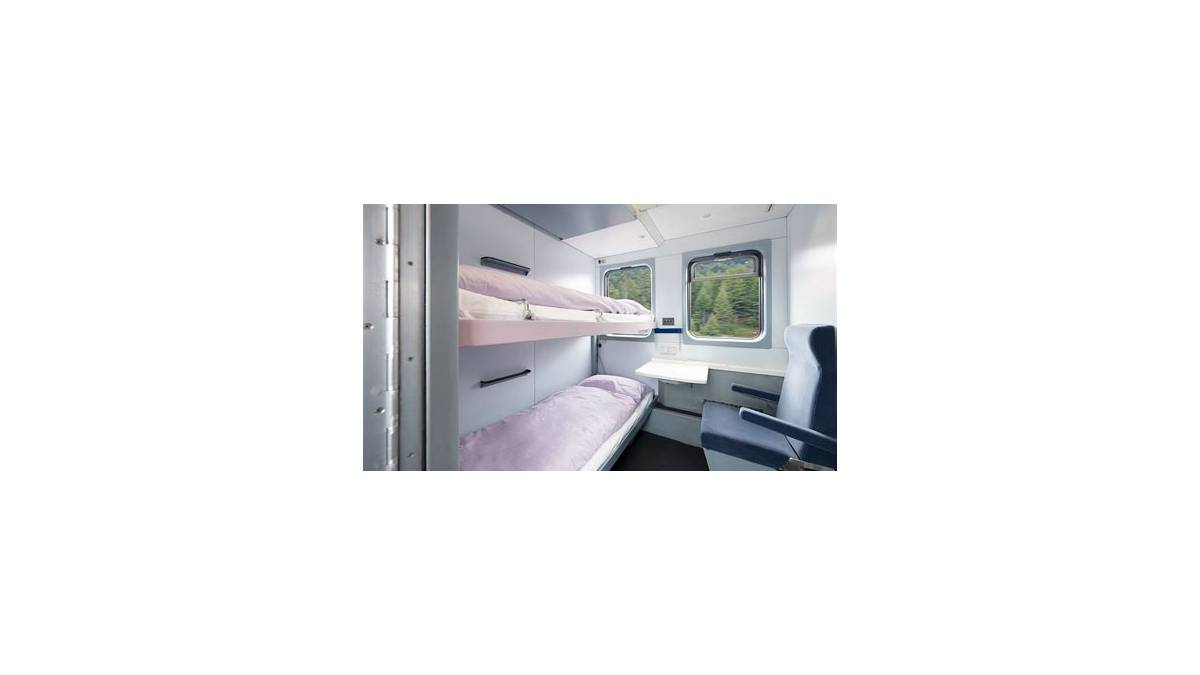
A night transfer does two jobs at once. It moves you and it houses you. Done right, it's the single biggest saving available to a European traveler.
Done wrong, it's a wasted day, a stiff neck, and a hotel room you booked anyway.
Sleeper vs Couchette vs Reclining Seat
These are three genuinely different products, and the price gap is large.
- Reclining seat: cheapest, no privacy, expect 4 to 6 hours of broken sleep at best
- Couchette: a bunk in a shared compartment of 4 or 6, sheets and pillow usually provided
- Sleeper: a proper bed, 1 to 3 berths, often with a sink and sometimes a shower
A Nightjet couchette from Vienna to Venice can run around €50 to €90 depending on season and how early you book. The sleeper version typically doubles that. The reclining seat version can sit under €30.
If you can only afford the seat, ask yourself honestly whether you'll function the next day. Arriving wrecked in a new city wastes the €30 you saved on a museum ticket you skip.
When a Night Transfer Is Worse Than a Hostel Bed
A night train loses to a hostel bed in four situations.
- The journey is under six hours, so you get almost no sleep
- You arrive at 5 a.m. with nowhere to check in
- The seat is a reclining chair on a coach, not a berth
- You have an early activity the next day
That last one matters most. Booking a night bus before a 9 a.m. walking tour is a self-inflicted wound.
The winning version is a berth on a 9 to 12 hour route, arriving between 7 and 9 a.m., with a hostel that lets you drop your bag early. That combination is close to unbeatable on value.
Booking Night Trains Without Getting Burned
Night trains sell out first in summer, sometimes months ahead. The cheap berths in each carriage go before the expensive ones.
Book as early as the operator allows. Match the direction to your body clock. If you can't sleep sitting up, don't book a seat.
Also check the arrival station. Some night services arrive at outlying stations with limited transit at that hour. Confirm the first metro or bus before you commit.
Operators worth knowing: ÖBB Nightjet, European Sleeper, SNCF night services, Trenitalia Intercity Notte, and the Swedish and Norwegian night networks.
Delay Risk and Your Rights
Night trains have more failure points because they cross borders. A delay of two hours can turn into a missed connection and a rebooked day.
Under EU Regulation (EC) No 1371/2007, rail passengers have defined rights on delays and cancellations. Those rights don't always cover the cost of a missed private booking, though. That's where a modest policy earns its keep, and our rundown of what travel cover actually includes is worth reading before you rely on one.
Keep a screenshot of every booking. If a delay forces an unplanned hotel night, documented receipts are what get you reimbursed.
Sleeping Cheap Without Wrecking the Trip
Accommodation is the biggest line item after transport, and it's also the easiest to overspend on by accident. The cheap option isn't always the small one. Sometimes it's the one with a kitchen.
Location costs money too. A cheap bed on the edge of town can cost more than a pricier one downtown once you add transit fares and hours.
Hostels: Dorms, Private Rooms, and What Reviews Miss
Hostel dorms are the default budget answer, and mostly a good one. A well-run dorm in a mid-priced city runs €20 to €35 in shoulder season and €45 to €65 in August.
Private rooms in hostels often undercut budget hotels by 20% to 30%, and you keep the kitchen and common areas. For couples, that's frequently the best value in the city.
Read reviews for specifics, not star ratings. Look for mentions of street noise, mattress age, air conditioning, and whether the lockers actually take a padlock. Those four things decide whether you sleep.
Filter for hostels with free breakfast and a kitchen. Those two features alone can save €15 a day.
Guesthouses, Budget Hotels, and the Rental Math
Small family-run guesthouses in Portugal, Spain, Poland, and the Balkans regularly beat hostel private rooms on price. They're less visible on booking platforms, so check local listings too.
Short-term rentals only win when you're staying four or more nights. Cleaning fees front-load the cost, and a three-night stay in a rental rarely beats a hostel private room.
Book accommodation with free cancellation several weeks out. Then recheck prices two weeks before you travel. If they've dropped, rebook and cancel the original.
If you're weighing whether to bundle the room with your flight, our comparison of booking flights and hotels separately covers where the savings actually come from.
Camping, House-Sitting, and Work Exchange
Camping is the cheapest legitimate option in Western Europe. A pitch with a tent for two runs €12 to €25 a night in most countries, and campsites exist near most major cities if you look.
House-sitting costs nothing but takes planning. You look after someone's home and pets while they travel. It's strongest in France, Spain, the UK, and Ireland, and it requires a profile and references built up over time.
Work exchange through WWOOF, Workaway, or HelpX trades a few hours of daily work for a bed and often meals. It's genuinely cheap. It's also slow, so it only suits travelers with weeks to spare.
City Tax, Deposits, and Cancellation Traps
The nightly rate is rarely the final number. Budget for these:
- City or tourist tax, usually €1 to €7 per person per night, often cash only
- Refundable deposits or key card fees, sometimes €10 to €20
- Linen and towel hire in cheaper hostels
- Late check-in surcharges at guesthouses
- Card surcharges on arrival
Check the cancellation window at the moment of booking. Free cancellation usually means free until 48 or 24 hours before. Miss that window and you pay the full first night, sometimes the whole stay.
Eating Cheap Without Eating Badly
Food is where budgets quietly leak. Not through one big blowout, but through four €14 lunches and a €5 airport coffee each day.
You can eat well in Europe on €15 to €25 a day. Plenty of people do it without touching a supermarket salad every night.
Supermarkets: The Cheapest Reliable Option
Discount chains like Lidl, Aldi, Biedronka, and Mercadona are everywhere. A day of groceries covering breakfast, lunch, and a simple dinner typically lands between €8 and €15 per person.
Bread, cheese, tomatoes, fruit, yogurt, and a rotisserie chicken from the deli counter will feed two people comfortably for under €12. That's a full meal in most capitals for less than a single main course.
Buy water in 1.5 litre bottles rather than small ones. The difference across a week is real money.
Hostel Kitchens and What They Actually Have
Hostel kitchens are usually good enough. Expect a hob, a kettle, some pans, and a fridge with a labelling system. Don't expect sharp knives or a working oven.
Cook in the evening, not at 8 p.m. when everyone else arrives. Bring a small spice kit, or buy one cheap jar and leave it behind.
In Italy, Germany, France, and Poland, hostel kitchens are generally well-stocked. In cheaper hostels in the Balkans and parts of Spain, they vary a lot. Check photos before booking if cooking matters to you.
Street Food, Markets, and Set Menus
Street food is the highest-value way to eat out cheaply.
- Italy: pizza al taglio, arancini, and a €1.20 espresso at the bar
- Spain: a tostada and coffee for €3, then a menú del día for €11 to €15 at lunch
- Portugal: bifanas, pastéis, and a prato do dia
- Poland, Czechia, Hungary: milk bars and lunch canteens where a full meal runs €5 to €8
- France: a sandwich from a boulangerie, not a café
The set lunch is the best-kept secret in pricey cities. Menú del día in Spain, plat du jour in France, and pranzo di lavoro in Italy are all identical meals at half the dinner price.
Eat your main meal at lunch. Then eat a picnic dinner. You'll spend €12 instead of €35, and in most Mediterranean countries the lunch is the better meal anyway.
Water, Coffee, and the Small Leaks
Tap water is safe across essentially all of the EU and the UK. Carry a refillable bottle. Public fountains in Rome, Lisbon, and Zagreb make this easy.
Coffee is cheapest standing at the bar. Sitting at a table in an Italian café can double the price. Same drink, different chair.
Avoid airport food entirely. A supermarket meal bought before you leave for the airport costs a quarter of what you'd pay airside.
Daily Food Budget by Style
| Style | Typical daily cost | What it looks like |
|---|---|---|
| Full self-catering | €8 to €15 | Supermarket breakfast, picnic lunch, cooked dinner |
| Mixed budget | €15 to €25 | Groceries plus one street food meal |
| Lunch out, evening in | €20 to €30 | Set lunch, supermarket dinner |
| Eating out twice | €40 to €60 | Restaurant lunch and dinner |
| Peak tourist zone | €60+ | Bar seating, airport food, hotel breakfasts |
Most travelers land in the mixed budget row and stay there. That's the sweet spot for cost and enjoyment on a long trip.
Booking Windows, Season, and the Discounts You're Missing
Timing does more for your budget than any single booking trick. The same seat, the same bed, and the same museum ticket change price dramatically depending on when you click and when you travel.
Get the window right and you're saving 30% to 60% without changing anything else about the trip.
When to Book by Transport Mode
Each mode has its own release rhythm. Miss it and you pay the walk-up price.
| Mode | Best booking window | Why |
|---|---|---|
| Budget flights | 6 to 12 weeks out | Fare buckets fill from the bottom |
| High-speed rail | 8 to 16 weeks out | Cheap quota tickets release early |
| Night trains | 8 to 20 weeks out | Berths sell out first in summer |
| Coaches | 3 to 8 weeks out | Yield pricing rewards early |
| Hostels | 4 to 10 weeks out | Free cancellation lets you hedge |
| Carpooling | 1 to 4 weeks out | Drivers post rides late |
There's a genuine exception on airlines. Last-minute fares occasionally dip on routes nobody wants, usually midweek and off-season. It's not a strategy.
It's a lottery ticket.
For rail, the quota is the thing. SNCF releases Prem's fares early and they vanish quietly. Deutsche Bahn's Sparpreis fares behave the same way.
Trenitalia's Super Economy fares follow the pattern. Book the moment your dates are firm.
Why Shoulder Season Beats Summer Every Time
The same city costs drastically less in May than in July. Transport is cheaper, beds are cheaper, and you're not queueing for anything.
Our research across accommodation and transport pricing shows the pattern clearly. Peak summer rates in Rome, Barcelona, and Amsterdam run 25% to 60% above late September. Night trains and cheap flight buckets go first.
Spring shoulder runs roughly April to early June. Autumn shoulder runs September through October. Both deliver decent weather across most of Europe, with the Mediterranean staying warm into October.
Winter is the cheapest season overall, outside Christmas markets and ski weeks. Northern cities get dark and cold. Southern cities get cheap, quiet, and perfectly walkable.
Discount Cards Worth Carrying
Most travelers ignore these because they assume they won't qualify. Check anyway.
- ISIC card gives student discounts on transport, museums, and some accommodation across the EU
- European Youth Card covers under-30s with similar benefits in 40 countries
- Youth rail fares cut 25% to 30% off Eurail and Interrail passes
- Senior fares on national rail operators typically save 20% to 40%
- Family tickets and group tickets often treat one child as free
- BahnCard 25 and 50 in Germany, Carte Avantage in France, and similar national cards pay off on repeated routes
The national rail discount cards are underrated. A BahnCard 25 pays for itself in two or three long journeys, and it stacks with advance fares.
City Passes and Free Museum Days
A city tourism card is worth it in expensive cities with clustered attractions. The Vienna Pass and the Roma Pass can pay off in two days. In cheaper cities, they rarely do.
Do the math before buying. Add up the attractions you'd actually visit at full price. Compare that to the card price plus the transit saving.
If the card doesn't win by 20%, skip it.
Free museum days exist in nearly every capital. London's major museums are free year-round. Paris has free entry at many state museums on the first Sunday of the month.
Madrid's Prado is free in the final two hours of each day. Check the official museum site, not a blog, because times change.
Free walking tours are the other reliable win. They cost nothing upfront and rely on tips. Budget €5 to €10 per person as a fair tip.
The Booking Calendar at a Glance
| Month | Price level | Best regions |
|---|---|---|
| January to March | Cheapest | Southern Europe, cities |
| April to early June | Low to moderate | Everywhere |
| Late June to August | Highest | Nordics, mountains, coast |
| September to October | Low to moderate | Everywhere |
| November to mid December | Cheapest | Southern cities, Central Europe |
| Christmas markets | High | Germany, Austria, Czechia |
Mistakes That Quietly Blow Up a Cheap Europe Budget
Most blown budgets don't come from a single disaster. They come from a dozen small errors that each look harmless.
Here are the ones our research turns up most often, with the fix beside each.
| Mistake | What it costs | The fix |
|---|---|---|
| Comparing ticket prices only | €20 to €60 per leg | Use door-to-door totals |
| Adding the bag at the airport | €50 to €70 each way | Buy it during booking |
| Assuming a rail pass is cheaper | €80 to €200 per trip | Run the reservation math first |
| Booking a night bus in a seat | A wasted day | Book a berth or take a daytime train |
| Staying far from the center | €8 to €15 a day in transit | Pay slightly more for location |
| Eating in the tourist zone | €15 to €30 a day | Walk two streets back |
| Paying in your home currency | 3% to 6% on every card tap | Always choose local currency |
| Skipping insurance | €300 to €2,000 if something breaks | Buy a modest policy |
| Overpacking | €40 to €160 in bag fees | Travel with 40 litres |
| Booking non-refundable too early | The whole fare if plans shift | Use free cancellation where possible |
The Bag Fee Mistake
This one is boring and expensive. Adding a cabin bag at the gate costs more than adding it at booking, sometimes by a factor of three.
Buy the bag while you're booking the seat, or don't buy it at all. There's no in-between that saves money.
The Pass Mistake
People buy a Eurail Pass, then discover that TGV, AVE, Frecciarossa, and Eurostar all charge reservation fees on top. Four long high-speed legs can add €50 to €80 per person.
Run the reservation total before you buy. If it pushes the pass above point-to-point, skip it.
The Location Mistake
A hostel bed €12 cheaper on the outskirts looks like a win. Then you spend €6 a day on transit and 90 minutes commuting. Over five nights, the cheap bed costs more and wastes eight hours.
Check the walking distance to a metro stop, not to the city center. A 15-minute ride on a €2 metro line is fine. A 40-minute bus with one change is not.
The Currency Mistake
Every card terminal and ATM will offer to convert your purchase into your home currency. Decline every time. The rate they use includes a markup of 3% to 6%.
Pay in euros, złoty, forints, koruna, or lei. Let your bank do the conversion at the real rate.
The Insurance Mistake
Cheap travel means rigid bookings. A twisted ankle, a stolen bag, or a missed connection can wipe out the savings from six months of careful planning.
Cover the trip. A standard policy for a three-week Europe trip costs less than one rebooked flight, and our detailed guide on what a policy should actually cover walks through the exclusions people miss.
Border Rules, Passenger Rights, and Safety Costs You Can't Skip
The cheapest plan collapses fast if you're turned away at a border or stranded by a delay with no recourse. These rules cost nothing to learn and plenty to ignore.
Read them before you book anything crossing into or out of the Schengen area.
The Schengen 90/180 Rule
Schengen allows visa-free short stays of up to 90 days within any rolling 180-day period. That's 90 days total across all Schengen countries combined, not per country.
The 180 days are counted backwards from each day you're in the zone. Overstaying creates real consequences. Expect fines, entry bans, and future visa refusals.
Track your days properly. A simple spreadsheet beats trying to reconstruct it at a border desk. Note that Bulgaria and Romania joined the Schengen area by air and sea in 2024, and the land borders followed in 2025.
Coverage details change, so verify before routing.
The UK and Ireland sit outside Schengen. Time there doesn't count toward the 90, but you also can't use a Schengen visa for it.
ETIAS and EES
The Entry/Exit System (EES) replaces manual passport stamping with biometric registration at the border. It applies to non-EU nationals on short stays, and it's rolling out progressively across entry points.
ETIAS is a separate travel authorisation for visa-exempt nationals. It's a short online application, not a visa. The official ETIAS portal is the only place to apply, and third-party sites charge unnecessary markups.
Both frameworks shift timelines. Treat any blog post as a starting point and confirm on official EU sources before you buy tickets.
Passport Validity
Different rules apply outside Schengen. The general Schengen expectation is a passport issued within the last 10 years and valid for at least three months beyond your planned departure.
Check your issue date, not just the expiry. A passport valid until 2031 but issued in 2015 fails the 10-year test.
Your Passenger Rights Under EU Law
EU law gives you defined rights on delays, cancellations, and denied boarding. Learn the thresholds.
- Air: Regulation (EC) No 261/2004 covers flights departing the EU, plus flights arriving on an EU carrier from outside. Delays over three hours at arrival can trigger €250 to €600 in compensation, unless the cause is extraordinary.
- Rail: Regulation (EC) No 1371/2007 covers delays, missed connections, and assistance. Compensation tiers vary by operator and journey length.
- Coach: Regulation (EU) No 181/2011 applies to journeys over 250 km, covering delays over 120 minutes and cancellation rights.
Know the difference between a delay and an extraordinary circumstance. Weather and air traffic control strikes are usually excluded. Technical faults and staffing shortages usually are not.
File claims directly with the operator first. If you get nowhere, the European Consumer Centres Network can help.
Health Cover: EHIC and GHIC
EU citizens should carry a European Health Insurance Card (EHIC). UK residents should carry a Global Health Insurance Card (GHIC). Both give access to state-provided healthcare on the same terms as a local resident.
Neither replaces travel insurance. They don't cover repatriation, private treatment, lost baggage, or delays. Many hospitals outside the state system won't accept them.
Non-EU travelers should check their own insurer's position. A US policy may cover emergency care abroad at a much lower rate than the local system, so buy the travel policy.
Pickpocketing and the Real Safety Cost
Theft is the most common financial risk on a budget trip. Barcelona's metro, Rome's Termini, Paris's Châtelet, and Prague's Old Town Square are well-documented hotspots.
Keep a decoy wallet if you're carrying cash. Split cards between bag and body. Never leave a phone on a restaurant table.
Losing a bag with cards, passport, and cash costs €150 in replacements plus two days of admin. That's a week of food budget gone in an afternoon.
A money belt is unglamorous and effective. Use one. Carry your passport separately from your cash.
Route Scenarios: Match the Cheapest Plan to Your Situation
Every rule above points in a slightly different direction depending on who you are. Here's how the whole toolkit assembles across four common traveler profiles.
Student with Three Weeks and a Tight Budget
Route: Lisbon, Madrid, Barcelona, Lyon, Berlin. Budget: roughly €900 to €1,200 all in.
The winning stack is a mixture of modes.
- Long legs on FlixBus or BlaBlaCar Bus, booked three weeks out
- Madrid to Barcelona on Renfe's Avlo, which runs cheap high-speed
- Barcelona to Lyon on BlaBlaCar, negotiated around €40
- Lyon to Berlin on a Ryanair hand-luggage fare plus a bus transfer
- Dorm beds with kitchen access and free breakfast
- Carrying the ISIC card for museum discounts
Night buses work here because the schedule is flexible. The saving on two hostel nights offsets the discomfort.
Couple with Fixed Dates and Limited Luggage
Route: Paris, Amsterdam, Bruges, Brussels. Budget: roughly €1,800 for one week.
Fixed dates reward early booking. Buy rail fares eight to twelve weeks out, because Thalys and Eurostar prices climb fast.
Book a hostel private room instead of two dorm beds, and check the price both ways. It's usually the same or cheaper.
Skip the rail pass. Four legs doesn't justify one, and the seat reservations on these routes eat the savings. If you're adding flights or a package, our breakdown of today's best-value package options is worth a look before you commit.
Time-Poor Traveler Wanting Four Cities in Ten Days
Route: Rome, Florence, Venice, Vienna. Budget: roughly €2,400 for ten days.
This is the profile where time is worth more than money. Pay for high-speed rail and score the day back.
Rome to Florence on Frecciarossa is 90 minutes. Florence to Venice is two hours. Venice to Vienna on a Nightjet berth covers the long leg overnight.
Use the night train deliberately. It's a transport cost and an accommodation cost in one line. The €70 berth replaces a €55 hostel bed and €60 of daytime transport.
If you're extending into a Mediterranean leg, the Malta flight and room combinations we've analysed show how a short hop can cost less than a long train.
One-Bag Solo Traveler on a Multi-Country Loop
Route: Berlin, Prague, Vienna, Budapest, Kraków, Warsaw. Budget: roughly €1,100 for three weeks.
This is where the equipment and the region both work in your favor. Central and Eastern Europe have low walk-up rail prices, cheap food, and reasonably priced hostels.
Buy point-to-point tickets as you go, not a pass. A Berlin to Prague RegioJet or FlixBus seat runs €12 to €20. Prague to Vienna is similar.
Vienna to Budapest on RegioJet can be under €15.
The one-bag rule unlocks hand-luggage fares across every budget carrier if you decide to skip a long leg. Your rail tickets carry no bag fees at all.
Eat at milk bars in Prague and Hungary. Buy supermarket breakfasts. Use free walking tours for orientation on day one in each city.
Hostels here run €15 to €25 in shoulder season, which stretches the budget enormously. Book the first two cities in advance and keep the rest flexible.
Frequently Asked Questions
What is the absolute cheapest way to travel around Europe?
Coaches are the cheapest per kilometre, followed closely by regional trains. FlixBus and BlaBlaCar Bus run routes across almost every country. For long distance over 800 km, a hand-luggage-only Ryanair or Wizz Air fare can undercut both.
Carpooling with BlaBlaCar often beats all of them on medium routes.
Is it cheaper to fly or take the train in Europe?
It depends on distance and luggage, not on the mode itself. Under 300 km the train usually wins outright. Between 300 and 800 km advance rail fares beat flights once baggage joins the math.
Over 800 km, budget flights usually win, unless the airport transfer adds more than €30.
How far in advance should I book cheap Europe travel?
Advance rail fares appear eight to sixteen weeks out. Budget flight prices settle around six to twelve weeks out. Night trains sell out earliest, sometimes five months ahead in summer.
Hostels with free cancellation are safe to book four to ten weeks out. Set price alerts and check twice a week.
Can I travel Europe on €50 a day?
Yes, comfortably, in Portugal, Spain, Poland, Hungary, Czechia, Romania, and the Balkans. That covers a dorm bed, supermarket meals, and local transit. It's tight but possible in Germany and Italy.
It's not realistic in London, Paris, Zurich, Amsterdam, or Copenhagen, where €100 to €130 is a workable floor.
Do I need travel insurance for a budget Europe trip?
Yes, and cheap travel makes it more important, not less. Non-refundable tickets and rigid schedules leave no room for a missed connection or a medical bill. EHIC or GHIC covers state healthcare for EU and UK citizens, but neither covers repatriation, delays, theft, or private treatment.
A basic policy costs less than one rebooked fare.
Is a Eurail Pass worth it for cheap travel?
Only for certain trips. A Eurail or Interrail Pass wins when you're crossing three or more countries and moving most days on regional services. It loses on trips with two or three long high-speed legs, because TGV, AVE, Eurostar, and Frecciarossa all charge reservation fees on top.
Run the reservation total before buying.

Similar Posts






















[…] Netherlands-only plan is simpler when you will stay in the country. A regional Europe plan can be more practical for onward travel; its country list and validity rules are part of the […]