Budget Trip to Japan: Essential Saving Tips
A budget trip in Japan isn't about skipping the good stuff. It's about spending where it counts and ruthlessly cutting everywhere else. Most people assume the country is flat-out expensive, then they see the rail pass prices and panic.
The truth sits somewhere calmer than that.
Here's the number that matters. The 7-day national Japan Rail Pass went from ¥29,650 to ¥50,000 in October 2023, per JR Group announcements. That single change reset the math for almost every itinerary.
So before you plan a train ride, here's the short version.
Budget Trip in Japan
A budget trip in Japan costs roughly ¥8,000 to ¥12,000 per day. That covers dorm beds, convenience store meals, and local trains. Regional rail passes often beat the national JR Pass now.
Book off-season and take overnight buses to cut costs. Cash still matters in smaller towns.
What Actually Blows Up a Japan Budget
Three categories decide whether you land at ¥9,000 a day or ¥30,000 a day. Accommodation, transport, and food. Everything else is noise.
Get those three right and the rest sorts itself out.
The three costs that eat 70% of your money
For most travelers, those buckets swallow about 70% of the total. Here's where the damage happens:
- Accommodation: a Tokyo dorm bed runs ¥2,000 to ¥4,000. A business hotel runs ¥6,000 to ¥10,000. Over 14 nights, that gap decides your whole trip.
- Transport: one Tokyo to Kyoto Shinkansen ride costs around ¥14,000. A single pass decision can swing your budget by ¥30,000.
- Food: convenience store meals land at ¥500 to ¥800. Sit-down dinners start around ¥2,000.
Splurge on one and the other two have to absorb it. Most broken budgets start with a ¥12,000 hotel night, followed by an attempt to eat on ¥1,500 a day. It doesn't work, and it isn't much fun either.
Why the October 2023 JR Pass price hike changed the math
The 7-day national pass jumped from ¥29,650 to ¥50,000 for an ordinary adult. The 14-day went to ¥80,000 and the 21-day to ¥100,000. That's a 69% increase on the 7-day.
The pass still works brilliantly for one trip shape. A fast, long-distance loop across several regions in a short window. For a gentle Tokyo, Kyoto, Osaka run, it's now usually a loss.
Price your route on the official Japan Rail Pass site before you commit.
The Variables That Decide Your Budget Before You Book Anything
Four variables change your daily number more than any money-saving hack. Length, route, season, and comfort level. Nail those and the tactics become easy.
Trip length, route, and pace
Longer trips get cheaper per day. Flights, insurance, and a SIM card are fixed costs you spread wider. A 14-day trip usually costs less per day than a 7-day one.
Route matters just as much. A tight Tokyo, Kyoto, Osaka triangle is cheap because the distances are short. A Tokyo to Hiroshima to Sapporo sweep is expensive because you're paying to move constantly.
And pace? Every city hop costs a half day and a train fare. Three bases over 12 days beats seven bases over 12 days, almost every time.
Season: Golden Week, Obon, cherry blossom, and the cheap windows
Japan's peak periods hit accommodation hardest. Golden Week runs late April to early May, Obon hits mid-August, and New Year plus cherry blossom season fill every bed in the country. Rates can climb 20% to 50%.
The cheap windows are less crowded than you'd think. Late May through June is warm and wet but affordable. September through November is mild outside the autumn leaf weeks.
January and February are the cheapest months outside ski country. The Japan National Tourism Organization lists regional festivals and peak dates if you want to plan around them.
Comfort level: dorm bed vs private room
This is the biggest lever you control. Here's roughly what each tier buys as of 2026:
| Travel style | Daily budget (¥) | What it buys |
|---|---|---|
| Shoestring | 8,000 to 10,000 | Hostel dorm, convenience store food, local trains |
| Budget | 12,000 to 16,000 | Capsule or business hotel, gyudon lunches, one splurge |
| Mid-range | 18,000 to 25,000 | Private room, restaurant dinners, some taxis |
Move one tier up and you roughly double your daily spend. That's the whole decision in one line.
Transport Decision: JR Pass, Regional Pass, or Point-to-Point
Run this check before anything else. Add up your long-distance legs at full price. If the total beats the pass price by a wide margin, buy the pass.
If not, skip it.
When the national 7, 14, and 21-day pass still pays off
If your route is a long-distance sprint, the national pass still wins. Think Tokyo to Kanazawa to Kyoto to Hiroshima to Fukuoka inside seven days. That's well past ¥50,000 in individual fares.
If you're staying in one region, it loses badly. A Tokyo and Kyoto round trip plus local trains rarely clears the bar anymore.
Regional passes worth knowing
Regional passes are where the real value moved. They're cheaper and less famous, which is exactly why they get overlooked.
- JR East Pass (Tohoku area): 5 flexible days, around ¥30,000.
- JR West Kansai Area Pass: 1 to 4 days, from about ¥2,800.
- Hokuriku Arch Pass: 7 days covering Tokyo to Osaka via Kanazawa.
- JR Kyushu Rail Pass: 3 to 7 days, ideal for a Fukuoka base.
Match the pass to the region you're actually sleeping in. That one habit saves more than any coupon.
IC cards, Nozomi surcharges, and discount ticket shops
Get an IC card on arrival. Suica, PASMO, and ICOCA work on local trains, buses, and convenience store counters, and the ¥500 deposit is refundable. Card sales were suspended for stretches in 2024 because of a chip shortage, so a digital card in your phone wallet is the safer bet.
Two more things. The national pass doesn't cover Nozomi or Mizuho trains without a supplement of roughly ¥4,000 to ¥5,000. And discount ticket shops in Tokyo and Osaka sell same-day and next-day tickets below counter price.
Where You Sleep: Hostel, Capsule, Business Hotel, or Manga Café
Your bed is the line item that decides your tier. Choose it deliberately and everything downstream gets easier.
Price bands and what you actually get
- Hostel dorm: ¥2,000 to ¥4,000. Shared kitchen, lockers, sometimes free breakfast. Curfews happen.
- Capsule hotel: ¥3,000 to ¥5,000. A pod, a shower, and quiet. Not built for two people with luggage.
- Business hotel: ¥6,000 to ¥10,000. Private room, private bath, often free breakfast. Toyoko Inn and Dormy Inn are consistent.
- Manga café: ¥1,500 to ¥3,000 for a night pack. A reclining booth, a shower, free drinks. A fallback, not a plan.
- Budget ryokan or guesthouse: ¥5,000 to ¥9,000. Tatami rooms and local character.
Location vs nightly rate, the trade nobody calculates
A ¥3,000 room 40 minutes from the center isn't a ¥3,000 room. Add two train fares a day and you're near ¥3,800, plus an hour of your life.
Book the cheap bed inside the city, not outside it. Asakusa, Ueno, and Shinjuku work for Tokyo. Near Kyoto Station works for Kyoto.
Namba and Umeda work for Osaka.
Booking windows and the arrival checklist
Book three to six weeks out for the best mix of price and choice. Peak season needs two to three months.
On arrival, do three things. Find the nearest 7-Eleven or Japan Post ATM, confirm your check-in window, and note the closest coin locker. Small moves, but they set the tone.
Long-Haul Moves: Overnight Bus, Budget Airline, or Shinkansen
These three options trade money against time against comfort. Pick based on how much each one is worth to you.
| Option | Cost example | Time | Reality check |
|---|---|---|---|
| Overnight bus | ¥4,000 to ¥8,000 | 8 to 10 hours | Saves a hotel night, costs sleep |
| Budget airline | ¥5,000 to ¥15,000 | 1.5 hours plus transfers | Baggage fees eat the savings |
| Shinkansen | ¥14,000 | 2.5 hours | Fast, comfortable, expensive |
Cost vs comfort vs lost time
Take the overnight bus if you can sleep sitting up and your next day is light. Tokyo to Osaka is the classic route. Arriving at 6am with a hostel bag drop is genuinely workable.
Take the budget flight if the route is long and the airport transfers are short. Peach and Jetstar Japan are reliable on the main domestic corridors.
Take the Shinkansen when time is the scarce resource. It's never the cheap option, but it gives you back a day.
Luggage forwarding, coin lockers, and budget airline baggage traps
Budget airline baggage fees are where cheap fares quietly stop being cheap. Weigh your bag before you book, and prepay the allowance online rather than at the airport.
Luggage forwarding (takuhaibin) costs roughly ¥2,000 to ¥3,000 per bag between major cities and arrives next day. Coin lockers cost ¥300 to ¥700 a day. Both beat hauling a suitcase onto an overnight bus.
Eating Well on Roughly ¥3,000 a Day
Food is the easiest place to save. It's also the easiest place to overspend by accident. A ¥500 convenience store meal and a ¥2,500 izakaya dinner are both eating out.
Convenience store strategy (7-Eleven, Lawson, FamilyMart)
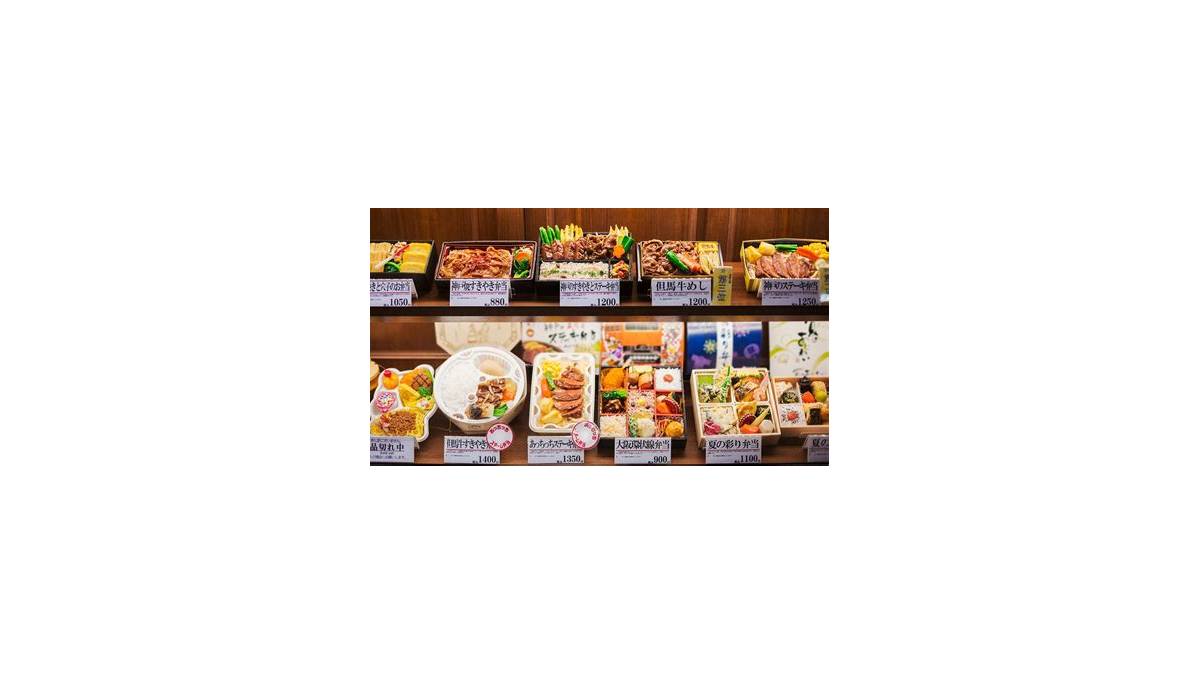
A convenience store meal lands at ¥500 to ¥800. Onigiri run ¥120 to ¥180. Bento boxes run ¥400 to ¥700, and the quality is better than the price suggests.
Add a drink and you're still under ¥1,000.
Gyudon chains, standing sushi, and Marugame Seimen
Gyudon chains serve a full beef and rice bowl for ¥500 to ¥700. Sukiya, Yoshinoya, and Matsuya are the big three. Marugame Seimen does udon for ¥400 to ¥600.
Standing sushi bars charge ¥80 to ¥150 per piece with no cover charge.
Supermarket and depachika discount hours
Here's the real trick. Supermarkets and department store food halls (depachika) cut prepared food by 20% to 50% in the last hour or two before closing. Look for half-price bento stickers.
Time it right and you eat well on ¥500.
A ¥3,000 day looks like this. ¥700 breakfast, ¥800 lunch, ¥800 dinner, and ¥700 in snacks and coffee. That's a good day of eating. You're just not doing sit-down restaurants three times a day.
Three Real Budget Profiles, and the Mistakes That Break Them
Abstract numbers only go so far. Here's what they look like on the ground.
Solo backpacker, 14 days, ¥9,000 a day
Total: roughly ¥126,000, excluding flights. Expect hostel dorms, convenience store meals, an IC card for local trains, and one regional pass for a 3-day side trip. The trap is adding a national JR Pass you don't need.
Couple, 10 days, mid-budget
Total: roughly ¥280,000 for two, excluding flights. Business hotels, casual restaurants, and two splurge nights at a ryokan with a private onsen. The trap is booking one night in a ¥30,000 city hotel and then trying to eat cheap.
It sours the whole mood.
Family of four, 12 days, Tokyo, Kyoto, and Osaka
Total: roughly ¥480,000 for four, excluding flights. Family rooms or two hostel doubles, supermarket breakfasts, and lunch at chains. Kids aged 6 to 11 pay half fare on JR trains, and under-fives ride free.
The trap is paying for a private room everywhere and caving on restaurant dinners.
Mistakes that quietly drain ¥30,000 or more
- Booking a hotel without checking the walk from the nearest station.
- Buying a national JR Pass without pricing the route first.
- Skipping breakfast, then buying ¥1,500 café meals out of hunger.
- Traveling during Golden Week without adjusting the budget.
- Withdrawing cash in small amounts and paying repeated ATM fees.
Frequently Asked Questions
Do I need cash or can I use cards in Japan?
Both work, but cash still rules in small restaurants, temples, and rural shops. Cards get you through cities and mid-range places. Carry ¥10,000 to ¥20,000 at a time and top up at 7-Eleven or Japan Post ATMs.
Foreign transaction fees run 1% to 3%, so check your card before you go.
Is a budget trip in Japan actually enjoyable?
Yes, with the right expectations. Shoestring travel means smaller rooms and simpler meals, not missed experiences. Free temples, public parks, cheap sushi, and public onsen give you plenty of memorable moments.
Spend on the two or three things you care about most.
How far ahead should you book a budget trip in Japan?
Three to six weeks out is the sweet spot for hotels and hostels. Peak seasons like cherry blossom or Golden Week need two to three months. Flights are cheapest around two to four months out.
Regional rail passes can sell out during holidays, so book those early too.
How much does a 14-day budget trip in Japan cost?
Budget around ¥8,000 to ¥12,000 per day, or ¥112,000 to ¥168,000 for 14 days. That covers hostel dorms, convenience store food, and local transport. Add flights, travel insurance, and one splurge experience.
Mid-range travelers should roughly double it.
Do you need a JR Pass for a budget trip in Japan?
Not always. Since the October 2023 price hike, the national pass only pays off on fast, long-distance routes. If you're staying in one or two regions, a regional pass or point-to-point tickets usually cost less.
Price your actual itinerary first.

Similar Posts