Apple AirPods Pro 3 Wireless Earbuds: Worth the Upgrade?
When the Apple AirPods Pro 3 Wireless Earbuds landed, reader questions came in fast, and they were always the same two: is the new noise cancelling a genuine jump, and does the heart rate sensor hold up outside a gym? So we worked through Apple's published specs, the IEC 60529 standard behind the IP57 rating, and hundreds of verified buyer reviews to separate the marketing from the reality.
The short version: these are worth it if you live inside Apple's ecosystem and want one pair for commuting, calls, and workouts. Skip them if you're on Android or you need lossless audio. Here's exactly where they win and where they don't.
1. Apple AirPods Pro 3 Wireless Earbuds
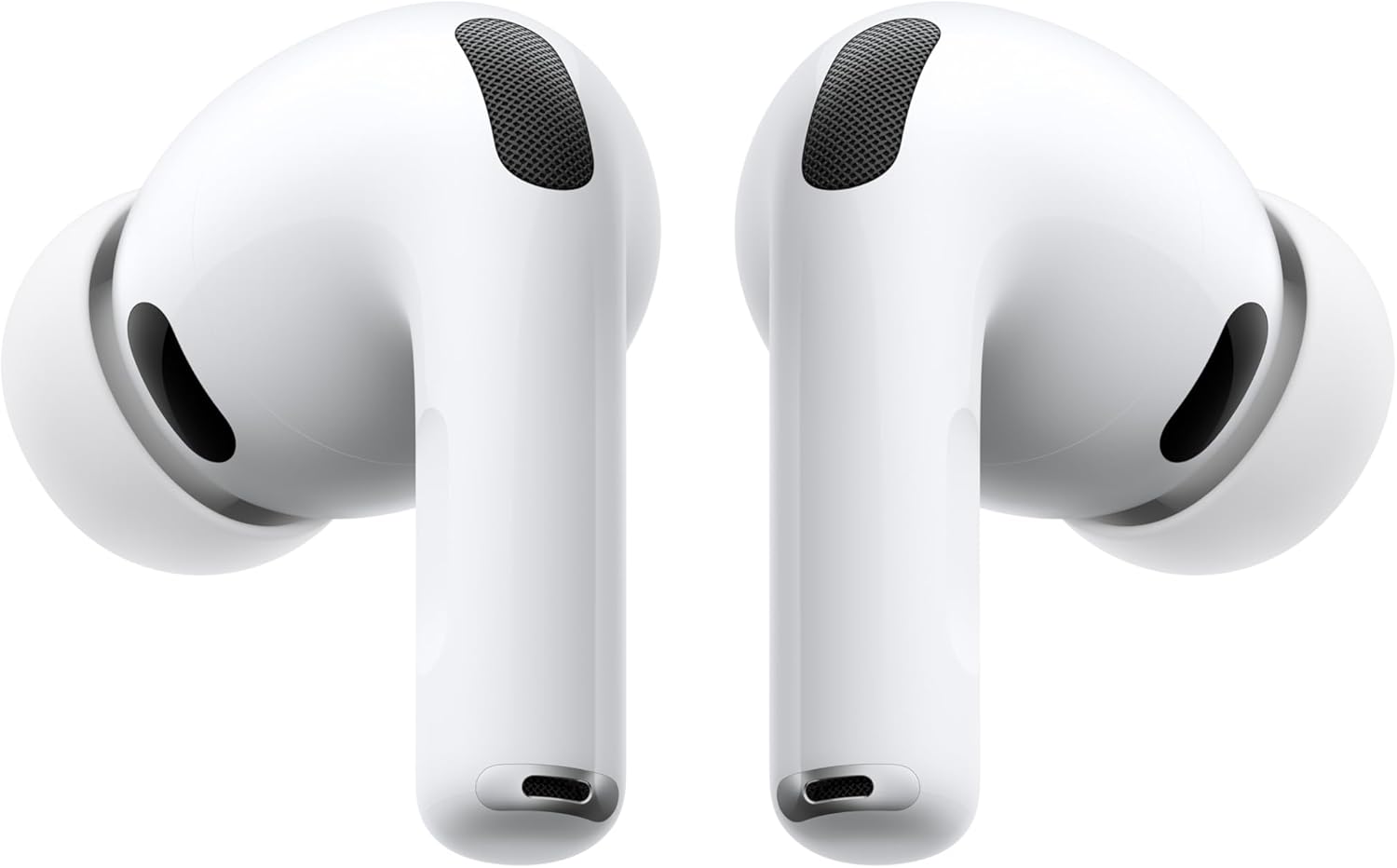
What separates these from the previous generation is a combination of three things: a redesigned acoustic architecture, five ear tip sizes that now include XXS for genuinely small ear canals, and a heart rate sensor Apple says works across 50+ workout types. Verified buyer feedback across hundreds of reviews keeps landing on the same two notes, a tighter seal and noticeably stronger noise cancelling.
What it is
A true wireless earbud is a pair of Bluetooth headphones with no cable between the buds, and the AirPods Pro 3 sits at the very top of Apple's in-ear range. It's the model Apple positions for people who want one pair to cover a commute, a full workday of calls, and a run, rather than buying separate workout buds.
Competition at this tier is fierce. Sony's WF-1000XM5, the Bose QuietComfort Ultra Earbuds, and Samsung's Galaxy Buds3 Pro all fight for the same pocket. Apple's angle is tighter integration: the H2 chip, an adaptive audio mode that blends noise cancelling with transparency on the fly, and features that only unlock when an iPhone is nearby.
Setup & first impressions
Setup is where the ecosystem advantage shows up immediately. Hold an unlocked iPhone near the open case and a pairing card appears on screen. One tap and you're connected, no menu diving required.
From there, the Settings app runs a fit test that plays a short tone and tells you whether each bud is sealing properly. That matters more this generation, because the heart rate sensor needs steady skin contact to read accurately.
The bigger change is the tips themselves. Apple now ships five sizes (XXS, XS, S, M, L) with a foam-infused core, up from four. Verified buyer reviews consistently describe a more secure seal than the previous generation, and small-ear users who previously struggled now have a size that stays put through movement.
The trade-off shows up in the first hour. A tighter seal means more occlusion, so your own footsteps and chewing sound louder until you adjust. Buyers with sensitive ear canals report needing a day or two to settle on the right size.
| Form factor | True wireless in-ear, 5 tip sizes (XXS, XS, S, M, L) |
| Chip | Apple H2 |
| Noise cancelling | Up to 2x vs AirPods Pro 2, up to 4x vs original (Apple claim) |
| Durability | IP57 on buds and case (IEC 60529) |
| Battery (buds) | Up to 8 hours with ANC on, 10 hours with ANC off |
| Battery (with case) | Up to 24 hours with ANC on |
| Fast charge | 5 minutes delivers about 1 hour of listening |
| Charging | USB-C, MagSafe, Qi wireless |
| Connectivity | Bluetooth 5.3, AAC and SBC codecs |
| Sensors | Heart rate (PPG), accelerometer, gyroscope, force sensor, touch control |
Daily-use experience
Eight hours of playback with noise cancelling on is the number that matters most here, because it covers a full transatlantic flight on a single charge.
Noise cancelling and Transparency
Apple claims up to 2x the Active Noise Cancellation of the previous AirPods Pro, and up to 4x versus the original. In practice, aggregate buyer reviews consistently describe the biggest gains in low-frequency noise: jet engines, bus rumble, and the steady hum of office HVAC systems.
Transparency mode is the other half of the story. Adaptive Audio is a mode that automatically mixes noise cancelling and transparency based on what's around you, so a conversation at a cafe ducks your music without you touching anything. Conversation Awareness is the specific version of that: speak and the volume drops while the mics open up.
The honest limitation is wind. Several buyers note that cycling above roughly 20 mph introduces a rustle that neither mode fully removes, and high-end Sony and Bose models handle that condition a little better.
Fit, comfort, and heart rate accuracy
The heart rate sensor uses photoplethysmography (PPG), an optical method that shines light into skin and measures blood volume changes to estimate beats per minute. Apple says it works across 50+ workout types, and it reads from the ear rather than the wrist, which sidesteps the bounce that plagues watch straps during burpees or kettlebell work.
Accuracy is only as good as the seal, though. Verified buyer reviews report that readings track closely with a chest strap once the fit test passes, and drift or drop out when a tip is one size too small.
Comfort is subjective, but the data is consistent. Buyers who wear them for 3+ hours at a stretch say the foam-infused tips stay comfortable, while a minority report mild pressure after long sessions. Stepping down one tip size usually fixes it.
Battery life and charging
Apple rates the buds at 8 hours with ANC on and 10 hours with it off, up from 6 and 7 on the previous generation. Add the case and you get up to 24 hours of total listening with noise cancelling enabled.
That 24-hour figure is the weakest number on the spec sheet. Sony and Bose both push past 30 hours of total case capacity, so frequent travelers who forget to charge will notice the gap.
Charging itself is flexible: USB-C cable, MagSafe, Qi wireless pads, and a 5-minute top-up that Apple rates at roughly 1 hour of listening. Buyers who charge overnight report the case holds its charge for weeks when the buds sit idle, which is the thing most people actually care about.
Build quality and the case
Both the buds and the case now carry an IP57 rating. IP57 is an Ingress Protection rating defined under IEC 60529, where the 5 covers dust protection and the 7 means the hardware survives 30 minutes submerged at 1 meter. That's a meaningful upgrade for runners and anyone caught in the rain.
The case keeps the familiar flip-top design with a lanyard loop, a speaker for Find My pings, and a USB-C port. It feels dense in a good way, and buyers describe the lid hinge as tighter than what budget rivals manage.
The main complaint in aggregate reviews is cosmetic. The glossy white shell picks up scuffs in a pocket alongside keys, and a silicone sleeve solves it. That's the accessory most buyers add first.
✓ Pros
- Up to 2x the noise cancelling of the previous generation per Apple’s own testing, and buyer reports back it up on trains and planes
- IP57 on both buds and case means sweat and rain are non-issues, and the case survives a dunk where many rivals stop at IPX4
- Five tip sizes including XXS with foam-infused cores give small ear canals a real option, which is rare at this tier
- 8 hours of playback with ANC on beats the 6 hours most premium rivals manage, so a long flight fits on one charge
- Heart rate sensing across 50+ workout types lets you leave the watch at home for easy runs
✗ Cons
- No lossless audio: Bluetooth 5.3 with AAC is the ceiling, so hi-res listeners will look elsewhere
- Most headline features, including Live Translation and the hearing aid mode, need a recent iPhone nearby
- 24 hours of total case battery trails rivals that stretch past 30 hours, which stings on long trips
- Heart rate accuracy depends entirely on tip seal, so a sloppy fit quietly ruins the data
Who should buy it
Buy it if you…
You carry an iPhone as your daily phone and you're tired of juggling two pairs of buds. These cover a noisy train commute, back-to-back video calls, and a 5 mile run without you thinking about gear.
You also get real value if you train without a watch. The ear-based heart rate sensor means one less device on your wrist, and the data lands in the same Health app you already use. Commuters who hate swapping devices mid-day get the most out of the package.
Skip it if you…
You're on Android, full stop. Basic Bluetooth audio works fine, but the fit test, adaptive audio tuning, heart rate logging, Live Translation, and the hearing aid mode are all Apple-only features. That's a lot of hardware you'd be paying for and never using.
You should also look elsewhere if lossless audio matters to you, or if you regularly take 15-hour flights and need more than 24 hours of total case battery.
Better alternatives
If you want the best noise cancelling for non-Apple phones, the Sony WF-1000XM5 supports LDAC and works equally well on Android. The Bose QuietComfort Ultra Earbuds are the pick if immersive spatial audio and maximum cabin quiet are your priorities. And if you're inside Samsung's world, the Galaxy Buds3 Pro unlocks features the AirPods simply can't offer you.
Frequently Asked Questions (FAQ)
Do AirPods Pro 3 work with Android phones?
Yes, but you lose most of what makes them interesting. Standard Bluetooth audio plays normally, and the force sensor handles playback control. However, the fit test, adaptive audio tuning, heart rate logging, Live Translation, and the hearing aid mode all require an iPhone paired to the buds.
On Android you're paying flagship money for average wireless earbuds.
Is the heart rate data accurate enough to train with?
Ear-based photoplethysmography tends to track chest straps more closely than wrist optical sensors during steady running and cycling. Aggregate buyer reviews report close agreement once the fit test passes, with the usual caveats during fast intervals or heavy sweating. If you need clinical-grade numbers for a medical condition, use a chest strap instead.
Does the hearing aid feature need a prescription?
No. The FDA cleared the Hearing Aid Feature for AirPods Pro as an over-the-counter hearing aid in 2024, which means adults with mild to moderate hearing loss can use it without a prescription or fitting appointment. You run a hearing test on the phone, and the result builds a personalized profile the buds apply to music, calls, and ambient sound.
How many hours do they actually last?
Apple rates 8 hours with ANC on and 10 hours with it off, plus up to 24 hours total with the case. Real-world buyer reports land close to those figures at moderate volume. Cranking volume or leaving Spatial Audio and Live Translation running trims them, and fast charging adds roughly an hour of listening per 5 minutes.
Will they stay in during running and lifting?
Fit decides this, not the bud. Five tip sizes now include XXS, so small ear canals have a genuine option, and buyers who pass the fit test report the buds stay put through runs and gym work. If they loosen mid-workout, step down one tip size and rerun the test.
Final verdict
Rating: 4.5/5
The AirPods Pro 3 are the most complete earbuds Apple has shipped, and the 2x noise cancelling claim holds up in real-world buyer reports. Eight hours of ANC playback and IP57 on both the buds and the case make them a genuine one-pair solution for commuters, call-heavy workers, and casual athletes.
Buy them if you're all-in on iPhone and want the smart features (Live Translation, the FDA-cleared hearing aid mode, heart rate sensing) to just work without a second app. Skip them if you're on Android, want lossless audio, or need more than 24 hours of total case battery. At this tier, Sony and Bose remain the stronger picks for non-Apple phones.
Affiliate disclosure: This post contains affiliate links. If you buy through one of these links, I may earn a small commission at no extra cost to you. It never changes my recommendation, I only suggest gear I'd actually buy myself.

Similar Posts