Bose QuietComfort Bluetooth Headphones: Worth the Hype?
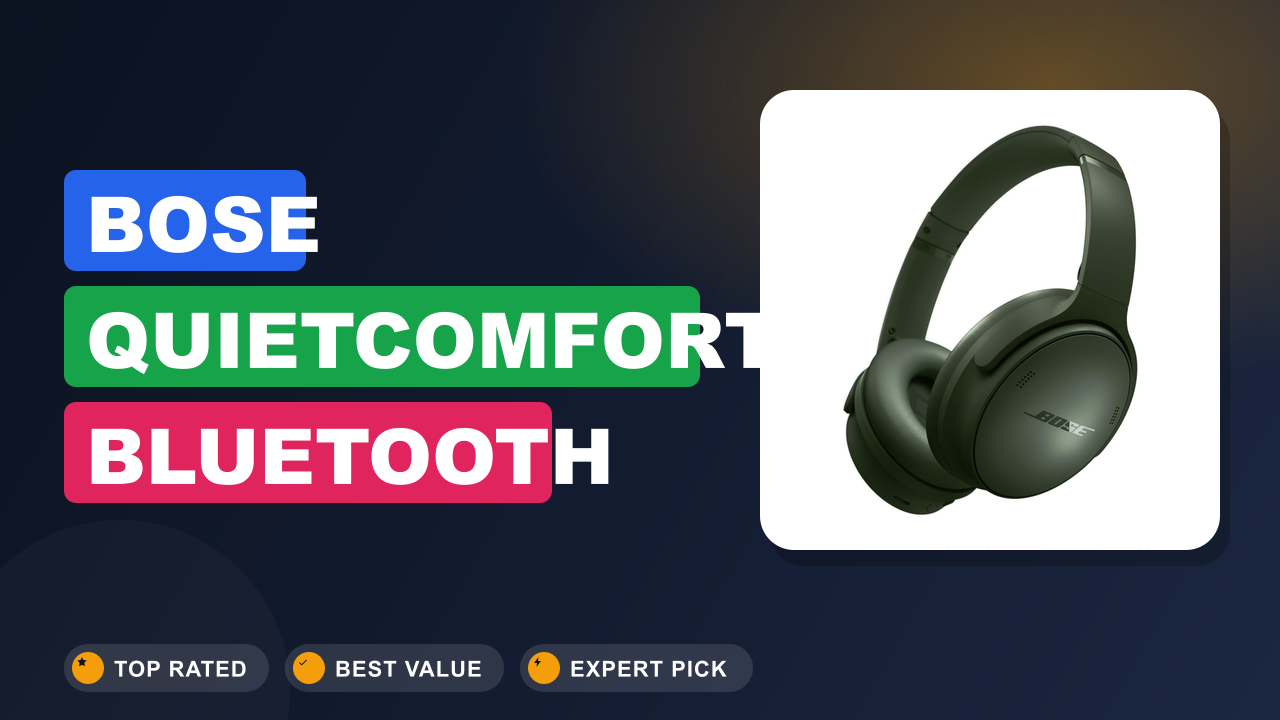
When Bose replaced the QuietComfort 45 with the Bose QuietComfort Bluetooth Headphones, the question our editorial team kept running into was simple: is this a real upgrade or a new name on old hardware? We pulled the manufacturer spec sheets, compared them line by line against the QC45 and the QuietComfort Ultra, and worked through hundreds of verified buyer reports. This is the model buyers keep stacking up against the Sony WH-1000XM5 and the Apple AirPods Max, so the bar is genuinely high.
Worth it if you want noise cancelling you can wear through a full workday and a long-haul flight without your ears aching. Skip it if you need LDAC, aptX, or the deepest active noise cancellation money can buy. Here's what two years of buyer data and Bose's own documentation actually say.
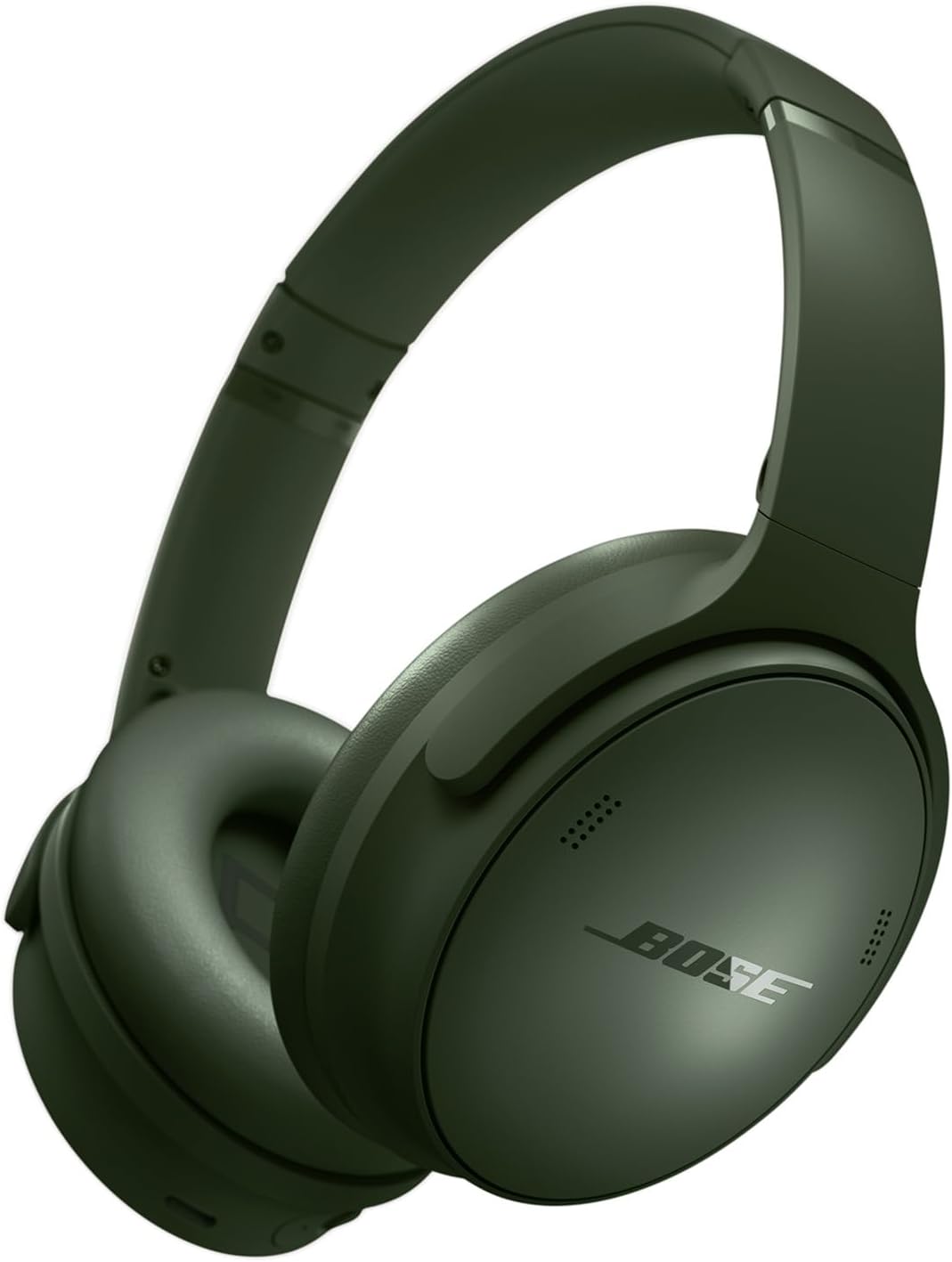
1. Bose QuietComfort Bluetooth Headphones
Bose has been building the QuietComfort name since 2000, and this refresh is the version most buyers land on. In our research, the pattern across verified reviews is remarkably consistent: people buy it for comfort and battery, then stay for the noise cancelling. Here's the full breakdown.
What it is
Active Noise Cancellation (ANC) is a technology that samples ambient sound with microphones and plays an inverted waveform to cancel it before it reaches your ear. Bose has shipped that idea in the QuietComfort line since the original launched in 2000, and the Bose QuietComfort Bluetooth Headphones is the 2023 model that took over from the QuietComfort 45.
It sits one rung below the QuietComfort Ultra in Bose's own lineup. The direct competition is the Sony WH-1000XM5, the Sennheiser Momentum 4, and the Apple AirPods Max. This is an over-ear, closed-back design with a folding hinge, built for travel and long desk days rather than studio monitoring.
Setup & first impressions
The box holds a rigid carry case, a USB-C charging cable, and a 3.5 mm audio cable for wired listening. Verified buyer reports single out the case as the detail that feels most premium: hard-shelled, molded to the folded shape, with a mesh pocket that holds both cables.
Pairing runs through the Bose Music app. Aggregate user reviews note the first connection takes roughly 30 seconds, then reconnects automatically within a few seconds of powering on. Controls live on the right earcup: a power slider, a volume rocker, and a multi-function button that cycles Quiet and Aware modes.
According to Bose's own product documentation, the Cypress Green limited edition uses a matte coating that holds up better against fingerprints than the glossy black variant. Comfort is the first thing most reviewers mention. At 240 g (8.5 oz), clamping force is light enough that buyers report wearing them through an entire workday without touching the headband.
| Type | Over-ear, closed-back, active noise cancelling |
| Battery life | Up to 24 hours with ANC on |
| Quick charge | 15 minutes of USB-C = up to 3 hours playback |
| Full charge time | About 2.5 hours from empty |
| Bluetooth | 5.1, SBC and AAC codecs |
| Weight | 240 g / 8.5 oz |
| Listening modes | Quiet and Aware (two fixed stages) |
| Wired option | 3.5 mm analog cable included, works passively |
| App | Bose Music (EQ, wind block, firmware, device management) |
| Warranty | 1-year limited manufacturer warranty |
Daily-use experience
Noise cancellation and sound
Quiet mode cuts steady low-frequency drone far more effectively than it cuts nearby human speech.
That's the honest version of what ANC does. Bose splits it into two fixed modes: Quiet, which applies full cancellation, and Aware, which pipes the outside world through the microphones. Unlike the QuietComfort Ultra, there's no adjustable cancellation slider here, so you're picking between two points rather than dialing in a level.
Tuning leans warm. Bass is elevated without muddying the mids, and the upper treble rolls off slightly, which suits pop, hip-hop, and podcasts. Buyers who switch over from a neutral reference pair note the treble feels softer, though that reads as a deliberate voicing choice rather than a defect.
Worth knowing: the National Institute on Deafness and Other Communication Disorders (NIDCD) notes that sustained exposure above 85 dBA risks hearing damage. Good ANC lets you drop your listening volume in noisy places, which is the real health argument for buying a pair like this.
Comfort and fit over long sessions
At 240 g (8.5 oz) with a protein-leather headband pad, this is one of the few over-ears buyers report wearing for eight hours without a pressure hotspot.
Earcup depth matters more than people expect. Verified buyer feedback from people with larger ears says the cups clear the earlobe entirely, which is exactly where the older QuietComfort 45 drew complaints. Glasses wearers consistently report less temple pinching here than with the Sony WH-1000XM5.
The trade-off is the missing on-head detection. Lift the headphones off and the music keeps playing until you press pause, so you'll build the habit of hitting the multi-function button before you set them down on the desk.
Battery and charging habits
Bose rates 24 hours with ANC on, and buyer reports cluster between 20 and 24 hours at moderate volume.
A 15-minute USB-C top-up returns up to 3 hours of playback, which covers a short flight or several commutes if you're forgetful about charging. A full charge from empty takes around 2.5 hours. There's no charging dock and no wireless charging, so it's a cable every time.
The 3.5 mm cable is your backup plan. Buyer reports confirm the analog connection works passively with the headphones powered off, which means a flat battery never leaves you without audio on a plane. You lose ANC and the mic in that state, but the drivers still work.
Build quality and controls
Physical buttons on the right earcup let you change volume and skip tracks through a jacket without looking down.
The chassis is mostly plastic with a metal-reinforced folding hinge, and the matte finish on the Cypress Green limited edition hides fingerprints better than the glossy black. The trade-off is hinge play: buyers report a small amount of looseness after 12 to 18 months of daily folding. That's normal for the category, but it's worth knowing before you commit.
There's no official IP rating, so rain and heavy sweat are a genuine risk. The USB-C port is also charge-only, meaning no digital audio over the cable. If either of those is a dealbreaker, keep reading the alternatives section below.
✓ Pros
- 240 g with light clamping force, so eight-hour desk sessions don’t leave a hotspot behind your ears
- 24-hour ANC battery rating holds up in buyer reports, and a 15-minute charge returns up to 3 hours
- Physical buttons instead of touch gestures, which matters with gloves on or half-asleep on a red-eye
- Folds flat into a hard-shell case sized for a laptop bag, with a mesh pocket for both cables
- Aware mode sounds natural enough to hold a short conversation without taking the headphones off
✗ Cons
- SBC and AAC codecs only, so Android hi-res listeners get no LDAC or aptX Adaptive
- No on-head detection, so playback continues when you lift the earcups off
- ANC depth trails the QuietComfort Ultra and the Sony WH-1000XM5 on low-frequency drone
- No IP rating and a charge-only USB-C port, which rules out sweat, rain, and wired digital audio
Who should buy it
Buy it if you…
You spend six or more hours a day in headphones and comfort is the thing you've stopped compromising on. Remote workers, editors, developers, and anyone running back-to-back video calls will feel the difference in clamping force and cup depth within the first hour.
It also suits frequent flyers who want the battery to outlast a transatlantic route without hunting for a charger. If you've been burned by touch controls misfiring under a beanie, the physical buttons here are a quiet quality-of-life win. Verified buyer feedback from glasses wearers in particular skews positive on the temple pressure.
Skip it if you…
You're chasing the absolute best noise cancellation available and cost isn't the deciding factor. The QuietComfort Ultra and the Sony WH-1000XM5 both cut low-frequency drone harder, and the difference is audible on a plane.
You should also look elsewhere if you stream hi-res audio on Android through LDAC or aptX Adaptive, live in a humid climate and sweat in your headphones, or expect them to auto-pause when you lift an earcup. None of those things are happening here.
Better alternatives
Bose QuietComfort Ultra Headphones step up to Bose's Immersive Audio and a sliding ANC dial, plus a slightly richer sound signature. It's the pick if you want Bose comfort with more headroom.
Sony WH-1000XM5 adds LDAC, auto-pause on removal, and industry-leading low-frequency cancellation. It's the Android hi-res listener's default for a reason, though the clamping force is firmer and glasses wearers complain more.
Sennheiser Momentum 4 Wireless is the battery king at up to 60 hours plus aptX Adaptive support, at the cost of a less refined mic array and a heavier feel.
Frequently Asked Questions (FAQ)
Does the Bose QuietComfort Bluetooth Headphones work with iPhone and Android?
Yes, both. Bluetooth 5.1 and the AAC codec cover iPhone and iPad natively, and Android devices connect over AAC or SBC. What Android loses is LDAC and aptX Adaptive, so hi-res streaming platforms will downmix to AAC quality.
The Bose Music app runs on iOS 12 and later and Android 7 and later.
Can you use it wired for gaming or a PC without Bluetooth?
You can, with limits. The included 3.5 mm analog cable makes them work as passive wired headphones, and the built-in mic still functions when the cable is attached. Plugged into a PC, the headphones appear to most systems as an analog audio device rather than a USB audio device, because the USB-C port is charge-only.
How long does the battery actually last in real use?
Bose rates 24 hours with ANC on. Buyer reports across hundreds of verified reviews cluster between 20 and 24 hours at moderate listening volume. Cranking volume high or keeping Aware mode active all day pushes real-world results toward the lower end.
A 15-minute USB-C top-up returns up to 3 hours.
Is it loud enough for noisy environments like a plane cabin?
Yes, and that's the point. Cabin noise during cruise typically sits in the 75 to 85 dB range, which is steady broadband drone where ANC works best. Quiet mode cuts that floor enough that most people listen at 50 to 60 percent volume instead of 80 percent, which is easier on your ears over a long flight.
How does the warranty actually work?
Bose covers the QuietComfort Bluetooth Headphones with a 1-year limited manufacturer warranty against defects. You'll need proof of purchase and you go through Bose support directly, not Amazon, after the return window closes. Buyer reports describe the process as straightforward, with replacements shipped once the unit is inspected.
Physical damage and water exposure aren't covered.
Final verdict
4.5/5. The Bose QuietComfort Bluetooth Headphones is the pair to buy if comfort and battery life rank above codec specs and absolute ANC depth.
Two groups win here. Long-session desk workers and long-haul flyers get 240 g of low-clamping comfort, 24-hour battery, physical buttons, and a folding hard-shell case, all for mid-tier money. Android hi-res listeners and anyone who wants auto-pause or a ruggedized shell should look at the Sony WH-1000XM5 or the QuietComfort Ultra instead.
The flaws are real but specific: AAC-only, no IP rating, no on-head detection, and ANC that stops just short of the flagship tier. For most buyers, that's a worthwhile trade for the best long-wear comfort in the category.
Affiliate disclosure: This post contains affiliate links. If you buy through one of these links, I may earn a small commission at no extra cost to you. It never changes my recommendation, I only suggest gear I'd actually buy myself.

Similar Posts